Legal Verification
Confirm ownership records, title history, transfer eligibility and any legal restrictions before making payment.

Bahria Town crisis 2026 Join us as we explore the financial, legal, and emotional implications of this scandal. We break down the core issues, how it impacts both small and large investors, and what the future holds for Pakistan’s real estate landscape. Plus, we discuss the potential recovery in 2026 and the steps that need to be taken for the market to regain investor confidence.
A concise overview of the major developments that shaped investor concerns and legal uncertainty.
| Year | Major Event |
|---|---|
| 2019 |
01
UK Asset Recovery Settlement
|
| 2023 |
02
NAB Investigations Intensified
|
| 2025 |
03
Legal Proceedings Expanded
|
| 2026 |
04
Investor Uncertainty Increased
|
The Bahria Town crisis has become one of the most talked-about topics in Pakistan’s real estate industry. The case involves Malik Riaz, the founder of Bahria Town, and charges of money laundering worth a staggering 1.1 trillion rupees. This scandal not only threatens the financial stability of the company but also affects millions of small investors who have invested their savings into Bahria Town properties.
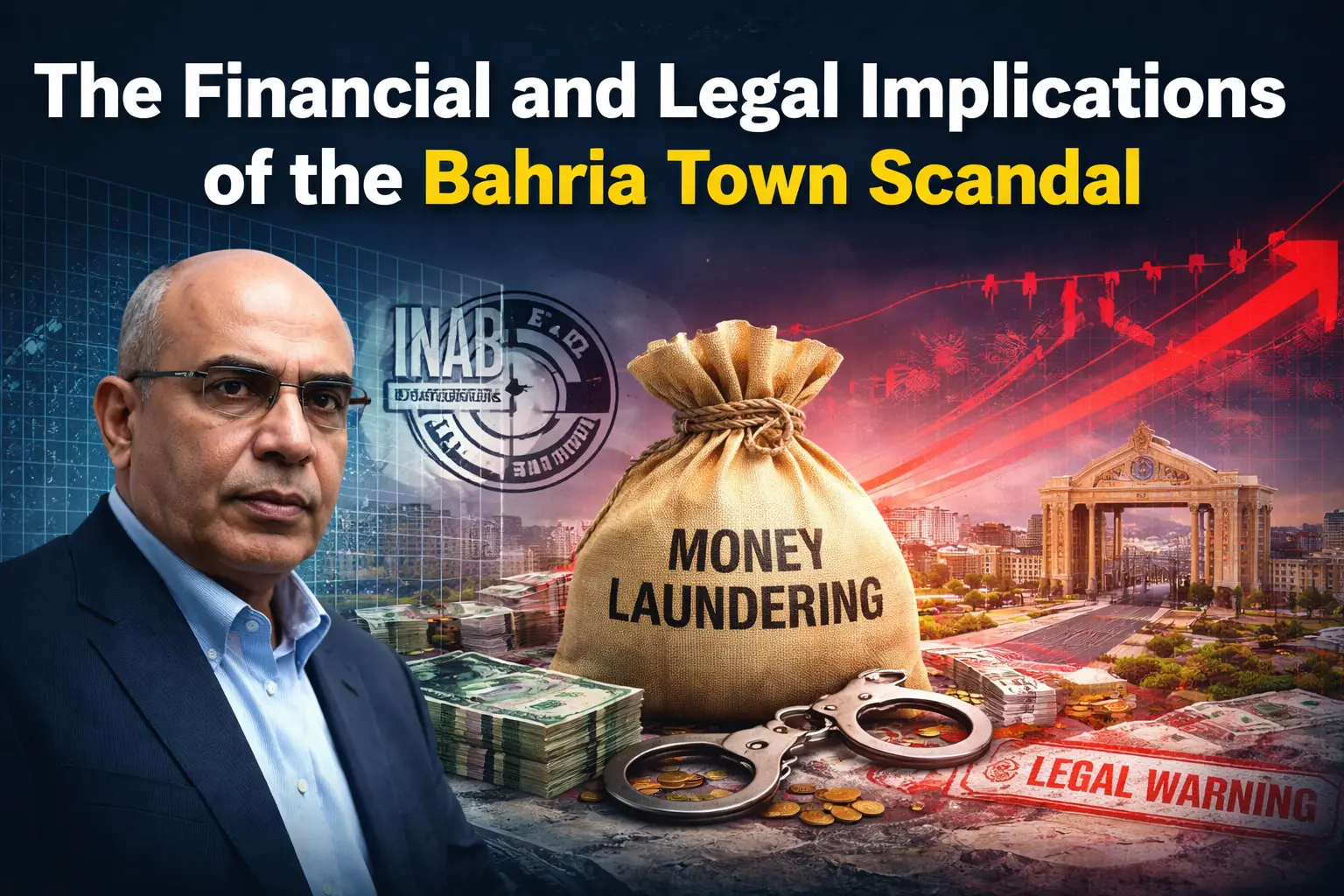
The scandal revolves around massive money laundering accusations, with Malik Riaz being investigated by the National Accountability Bureau (NAB). This unprecedented sum has caused widespread concern about the financial integrity of the project, especially as it involves many small-scale investors and middle-class buyers who have committed large amounts of their savings to Bahria Town crisis 2026 projects.
This issue has sparked panic among buyers who are uncertain about the stability of their investments, but it has also created an opportunity for large investors to buy at reduced prices.
Earlier development plans for the Ravi River date back to before 2013, with foreign consultants including Minehart engaged for feasibility studies. Research from 2013 to 2016 explored pollution control and ecosystem restoration but these plans were ultimately rejected as too costly, unfeasible, or environmentally problematic. bahria town crisis 2026 The current uncertainties around RUDA reflect this longer history of unresolved challenges.
| Factor | Impact |
|---|---|
| Investor Confidence | Very Low |
| Market Activity | Slow |
| Property Prices | Volatile |
| Buyer Demand | Declining |
| Legal Risk | High |
One of the core themes of this scandal is the difference in reaction between small investors and large-scale property developers. the Bahria town crisis 20206 Malik riaz very bad crisis and face the NAB cases
Review these five critical factors before investing to reduce legal, financial and market-related property risks.
Confirm ownership records, title history, transfer eligibility and any legal restrictions before making payment.
Check whether the project or housing society has valid approval from the relevant development authority.
Review the developer’s completed projects, delivery history, financial reliability and market credibility.
Assess buyer demand, resale activity and how easily the property can be sold when you need an exit.
Verify allotment, possession, transfer, tax, payment and society documents before signing any agreement.
Confirm that the housing society has valid approvals from the relevant development authority.
Understand the complete ownership transfer procedure before making any payment.
Review all applicable tax records, dues, and legal obligations related to the property.
Inspect the project's actual construction progress instead of relying only on marketing claims.
Verify whether possession is available immediately or expected in a future phase.
Carefully review installment schedules, hidden charges, and overall payment terms.
With legal proceedings underway, the future of Bahria Town crisis 2026 and its many projects remains uncertain. Malik Riaz’s statements about the possibility of selling assets and limiting operations raise questions about the future of the development. The credibility gap caused by these actions has affected both local and international confidence in the company.
However, real estate markets are cyclical, and despite the current downturn, the market could recover once regulatory pressures stabilize.
Investors should remain cautious. The current market instability means that there is a significant risk involved, especially for smaller investors. Before making any new investments, it is recommended that buyers carefully evaluate the legal proceedings and the long-term viability of Bahria Town projects.
For larger investors, this crisis could present an opportunity to buy properties at discounted rates. However, they should stay informed about the legal developments and market shifts to ensure long-term success.
The question on everyone’s mind is whether property prices at Bahria Town will recover in the short term or long term. While the crisis has created a downward pressure on property values, the market may stabilize once the legal battles are resolved and investor confidence is restored.
Factors influencing recovery include:
Regulatory reforms to ensure transparency and accountability
| Situation | Short Term | Long Term |
|---|---|---|
| Legal Issues Continue | Weak | Uncertain |
| Issues Resolved | Stable | Positive |
| Investor Confidence Returns | Moderate | Strong |
Always confirm that the housing society or project has a valid No Objection Certificate (NOC) from the relevant authority before investing.
Check ownership records, title documents and legal status to avoid future disputes and fraudulent transactions.
Compare prices, facilities, development progress and long-term growth potential before making your final decision.
Do not invest based on marketing hype or pressure. Always make decisions based on research and verified information.
Long-term investments generally provide better appreciation and more stable returns than short-term speculation.
The Bahria Town crisis 2026 scandal serves as a reminder of the importance of transparency and accountability in real estate development. While the current situation is difficult, the market is likely to recover, as long as the right steps are taken by regulatory bodies and investors. The key challenge now is how quickly the market stabilizes and how much confidence can be restored.
Whether you’re investing in Lahore, DHA, Bahria Town crisis 2026, or any other housing society, The HM Property Developers helps you make informed investment decisions backed by market research and legal verification.
Find answers to common questions about the Bahria Town Crisis 2026, legal risks, property prices, investor confidence and Pakistan’s real estate market.
The Bahria Town Crisis 2026 refers to the legal, financial and market uncertainty surrounding Bahria Town projects, investigations involving its leadership, investor concerns and pressure on property confidence and resale activity.
Investment safety depends on the specific project, legal approvals, possession status, documentation, transfer process and current market liquidity. Buyers should complete legal verification before making any payment.
The crisis may create price pressure, slower resale activity and greater negotiation between buyers and sellers. The impact can vary according to city, phase, possession status and investor demand.
A recovery may depend on the resolution of legal issues, restoration of investor confidence, regulatory clarity, project development and improved market activity. Recovery timing cannot be guaranteed.
Small investors may face difficulty selling property, delayed returns, uncertainty about project progress and greater financial stress because a large portion of their savings may be tied to a single investment.
Some financially strong investors may view lower prices as an opportunity. However, discounted prices do not remove legal, liquidity or project risks, so due diligence remains essential.
Buyers should verify ownership documents, allotment or transfer letters, payment history, NOC status, possession documents, society dues, taxes and any restrictions affecting transfer or construction.
Major risks include unclear legal status, weak resale demand, delayed development, missing approvals, uncertain possession and buying solely on marketing claims without verification.
Possession properties generally provide more visible development and usability, while files can carry higher speculative risk. The better option depends on legal status, budget, development progress and investment objective.
Overseas Pakistanis can invest, but they should use a trusted local representative, verify documents through qualified professionals, inspect the property and avoid sending money based only on online marketing.
DHA is often considered more structured in some markets, but no housing society is completely risk-free. Buyers should compare approvals, location, development, resale demand, transfer rules and current prices before investing.
The crisis may reduce investor confidence, slow transaction activity and increase demand for legally verified projects. It can also encourage buyers to place greater importance on transparency and documentation.
Owners should keep all payment and ownership records, monitor official developments, confirm outstanding dues, avoid panic selling and consult qualified legal or real estate professionals before making major decisions.
Recovery may be supported by legal clarity, regulatory compliance, transparent communication, continued development, improved transfer activity and renewed investor confidence.
Investors can reduce risk by checking legal approvals, verifying ownership, visiting the project, comparing market prices, reviewing transfer rules, avoiding unrealistic promises and seeking independent professional advice.

41k, Block K, Gulberg 3, Lahore, Pakistan
P: 0324 2827883
E: info@thehmpd.com