Luxury homes problems in Pakistan
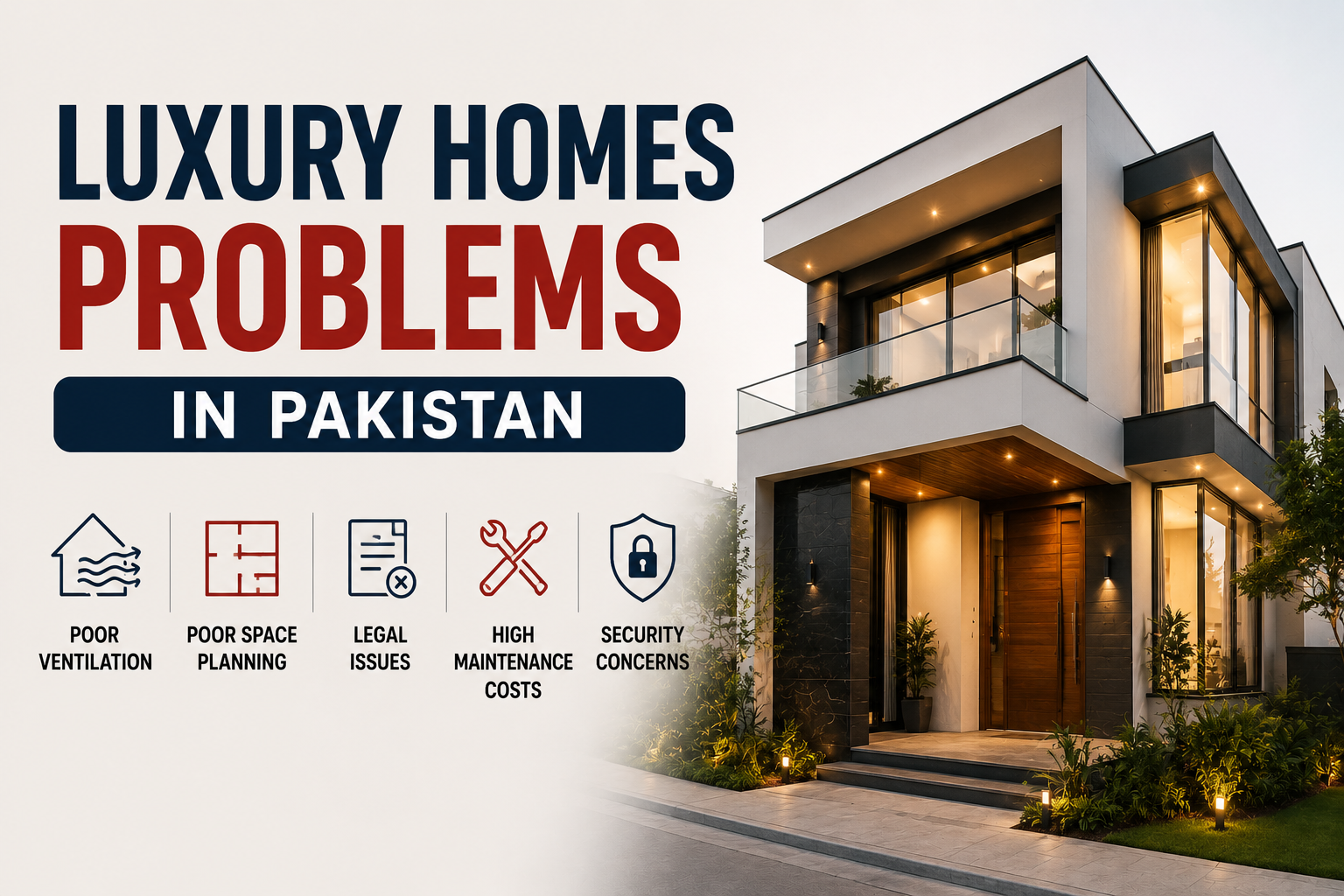
Luxury Homes Problems in Pakistan: What Buyers Should Know Before Investing
Luxury homes problems in Pakistan are not about budget they are about priorities. You spend tens of millions on a house, guests admire the marble and double-height ceiling, then summer arrives and the rooms feel stuffy, the electricity bill doubles, and you realize the design was built to impress, not to live in.
This is the quiet reality behind luxury homes problems in Pakistan today. The issue is not money. It is priorities. Homes are being built to impress visitors, not to serve the people living inside them.
The Real Architecture Problems in Pakistan Nobody Discusses
The most damaging architecture problems in Pakistan are not structural failures or legal disputes. They are design oversights that make daily life worse.
Ventilation is the first casualty
Most high-end homes either have windows that are too small, placed on a single wall, or buried so deep in the facade that air cannot move. The result is a house that traps heat and depends entirely on air conditioning a system that runs eight to ten months a year and costs you every month for the rest of your ownership.
Natural light is the second
Deep lobbies, narrow openings, and closed internal layouts mean that even expensive homes need artificial lighting during daylight hours. This is a basic design failure. A properly designed home in Pakistan should not require ceiling lights at noon.
Space planning is the third
Large square footage does not equal comfort. Rooms that are oversized but poorly proportioned feel empty, not generous. Awkward circulation the path you walk from one room to another creates friction in daily life that you stop noticing consciously but never stop feeling.
The result is a house that traps heat and becomes heavily dependent on air conditioning during warmer months, increasing electricity consumption and long term living costs.
Luxury Home Design Mistakes Pakistan Keeps Repeating
The deeper problem is that most luxury home design mistakes in Pakistan come from copying international aesthetics without adapting them to local conditions.
Glass-heavy facades look contemporary in European climates. In Lahore or Karachi, they function as heat traps. Open-plan layouts appear aspirational in design magazines. Without cross-ventilation, they become uncomfortable in a country where outdoor temperatures regularly exceed 40°C.
Behind the expensive finishes, cost-cutting happens where buyers cannot see it — insulation, waterproofing, structural fill, electrical load planning. The visible surfaces are premium. The hidden systems are not. You discover this in year two or three, when the problems surface and the builder is unreachable.
Hidden Construction Problems in Luxury Homes
Some of the most expensive problems in luxury homes are hidden behind paint, tiles and decorative finishes. A property may appear complete during a short inspection while still having weaknesses that become visible after seasonal rain, prolonged heat or regular use.
Poor Waterproofing
Weak waterproofing can cause roof leakage, damp walls, peeling paint, mould and damage around bathrooms, basements and balconies. Buyers should inspect ceilings, wall corners, external joints and areas around plumbing before making a final decision.
Inadequate Heat Insulation
A luxury home with poor roof and wall insulation may become extremely hot during summer. Large windows, exposed roofs and glass-heavy façades can further increase heat when shading and energy-efficient materials are not properly planned.
Weak Electrical and Plumbing Planning
Luxury homes require proper electrical load planning for air conditioners, kitchen appliances, water pumps, heating systems and backup power. Poor wiring, undersized circuits, weak water pressure and inaccessible plumbing lines can result in repeated repair costs.
Low Quality Work Behind Premium Finishes
Imported tiles, branded sanitary fittings and decorative ceilings do not guarantee quality construction. Buyers should also evaluate the structure, brickwork, plaster, waterproofing, electrical wiring and plumbing systems behind the visible finishes.
Luxury House Design Flaws That Affect You Every Single Day
Some luxury house design flaws are cosmetic. Others affect safety and daily function.
Slippery flooring is among the most common. Imported tiles are selected for appearance, not surface grip. Homes with elderly residents or young children become genuine hazards. No amount of aesthetic appeal justifies a floor that becomes dangerous when wet.
Floating staircases are chosen for visual impact. They work in showrooms. In a family home used daily by people of different ages, they create unnecessary discomfort and risk.
Glass railings and frameless features reduce durability and privacy. They look sharp in photographs. They also scratch, crack, require constant cleaning, and eliminate the visual separation between spaces that makes a home feel settled rather than performative.
Color choices disconnected from light conditions make rooms feel either washed out or oppressive. When paint and material selections are made in a showroom rather than inside the actual space, the result rarely translates well.
Floating Staircase Paragraph Replace
Floating staircases may create a modern appearance, but they should be designed with safe tread dimensions, reliable handrails and the needs of children and elderly residents in mind. A visually impressive staircase should never compromise everyday safety.
Uncomfortable Luxury Homes in Pakistan: The Gap Between Price and Experience
Uncomfortable luxury homes in Pakistan contact us are not a fringe problem they are the dominant pattern. The reason is simple: the market rewards visual impact at the point of sale. Buyers make decisions based on walkthroughs that last thirty minutes on a pleasant day. They do not experience the house in August at 2 PM, or at midnight during a power cut, or after three years of use.
Developers understand this. So design decisions consistently favor what photographs well over what performs well. The buyer absorbs the cost of that priority for decades.
High Maintenance Costs of Luxury Homes in Pakistan
Luxury homes generally contain more materials, equipment and decorative elements that require regular maintenance. Large glass panels, wooden features, imported fittings, landscaped gardens, swimming pools, basements and smart-home systems can all increase long-term ownership costs.
Before purchasing a luxury house, buyers should estimate the cost of air conditioning, electricity, waterproofing, exterior maintenance, glass cleaning, landscaping, security systems, plumbing repairs and replacement of imported fixtures.
A genuinely valuable luxury home should be comfortable and durable without creating unnecessary maintenance problems for the owner.
Apna Ghar House Masters Se Banwayen
بیرون ملک ہوں یا لوکل — مفت مشورہ اور کوسٹ اسٹیمیٹ کے ساتھ
Grey structure or full turnkey — we manage your project from foundation to finish, with regular updates so you're always in control.
No commitment required · Response within 1 hour
Legal Problems to Check Before Buying a Luxury Home
Good design and premium construction are not enough if the property has unclear ownership or incomplete approvals. Buyers should complete legal verification before paying a booking amount, advance payment or property transfer fee.
Verify Property Ownership
Confirm that the seller is the lawful owner and that the property documents match the seller’s identity. The title history should also be checked to identify ownership disputes, mortgages or transfer restrictions.
Check Society and Development Authority Approval
Buyers should confirm the approval status of the housing society, plot and building plan with the relevant development authority or society management. Approval requirements may vary according to the city and location.
Confirm Outstanding Dues
Check whether society charges, utility bills, property taxes, transfer fees or other outstanding payments are attached to the property.
Use Professional Legal Support
A qualified property lawyer or experienced property consultant can help verify ownership documents, transfer requirements, approvals and contractual terms before the purchase is completed.
What to Look for in a Luxury Home in Pakistan
Before purchasing a luxury home, evaluate both the visible design and the hidden construction systems. A short property visit is not enough to judge long term comfort and quality.
- Ventilation: Check whether air moves naturally through bedrooms and living areas.
- Natural light: Visit during daylight and see whether major rooms remain bright.
- Heat control: Examine roof insulation, window size, shading and exposed glass.
- Space planning: Check room sizes, door positions, stairs and movement between rooms.
- Floor safety: Inspect tiles and stairs for grip, especially in bathrooms and kitchens.
- Waterproofing: Look for damp walls, roof leakage, mould and peeling paint.
- Electrical systems: Confirm that the electrical load supports air conditioners and appliances.
- Plumbing: Check water pressure, drainage and signs of pipe leakage.
- Construction quality: Ask about structural materials, insulation, wiring and waterproofing.
- Legal documents: Verify ownership, approvals, taxes and outstanding society dues.
Well Designed Luxury Home vs Poorly Planned Luxury Home
Well Designed Luxury Home
- Proper cross-ventilation
- Natural daylight in main rooms
- Climate-responsive design
- Quality waterproofing and insulation
- Safe flooring and stair design
- Clear ownership and approvals
- Reasonable maintenance requirements
Poorly Planned Luxury Home
- Heavy dependence on air conditioning
- Artificial lights required during the day
- Copied design unsuitable for local weather
- Leakage, dampness and excessive indoor heat
- Slippery floors and unsafe stairs
- Unverified documents or unpaid dues
- Frequent repairs and high operating costs
Build a Luxury Home Designed for Comfort, Safety and Pakistan’s Climate
House Masters Pakistan helps clients plan and construct practical luxury homes with attention to ventilation, natural light, space planning, waterproofing, material quality and long-term maintenance.
Whether you need grey structure construction or a complete turnkey solution, our team can guide your project from initial planning to final finishing.
What Makes a Luxury Home Truly Valuable?
A truly luxurious home is not defined only by marble, imported fittings or an impressive exterior. It should provide comfort, privacy, safety, durability and efficient daily living.
A well-designed luxury home should remain naturally bright, allow proper airflow, control excessive heat and provide practical movement between rooms. Its electrical, plumbing, waterproofing and structural systems should be planned as carefully as its visible finishes.
Before investing, buyers should evaluate how the house performs—not only how it appears in photographs. Good planning can prevent years of high bills, repeated repairs and uncomfortable living conditions.
The Real Standard for Luxury Homes in Pakistan
True luxury is not what the house looks like in a listing. It is what it feels like on a Wednesday morning in July when you wake up, move through the space, and everything works without friction.
A genuinely well-designed home breathes. It stays cooler without full dependence on mechanical systems. It is bright during the day. It moves logically. The materials hold up after years of use. The design works with Pakistan’s climate, not against it.
That is the standard worth paying for. And it is available — but only if you know what to demand before you sign anything.
At House Masters Pakistan, every design decision ventilation, layout, light, material selection, construction quality — is made with long-term livability as the benchmark, not the photoshoot. Solving luxury homes problems in Pakistan starts with asking the right questions before you commit to anything. The decisions made at the start determine everything that follows.
Conclusion
Luxury homes problems in Pakistan usually begin when visual appearance is given more importance than climate, construction quality and daily usability. Poor ventilation, weak insulation, hidden waterproofing defects, unsafe materials, inefficient layouts and unclear documentation can turn an expensive property into a long-term burden.
Buyers should inspect the property carefully, request technical details, verify legal documents and seek professional guidance before making a final commitment. A genuine luxury home should offer lasting comfort, safety and value—not only an impressive first appearance.
Frequently Asked Questions
Common questions about luxury home design, construction quality, legal verification, maintenance and property buying in Pakistan.
Common problems include poor ventilation, excessive indoor heat, weak waterproofing, inefficient layouts, unsafe staircases, low-quality hidden construction work, high maintenance costs and incomplete legal documentation.
A truly luxurious home should provide comfort, privacy, safety, durability, natural light, proper ventilation and practical space planning. Expensive finishes alone do not make a property genuinely luxurious.
Inspect the roof, walls, bathrooms, basement, electrical panel, plumbing, drainage and visible structural areas. Ask for details about concrete, steel, wiring, pipes, insulation, waterproofing and the materials used behind decorative finishes.
Proper ventilation improves indoor comfort, reduces trapped heat, removes moisture and helps control odours. Poor airflow can make a home heavily dependent on air conditioning and increase electricity costs during warmer months.
Glass-front homes can work when energy-efficient glazing, external shading, insulation and ventilation are properly planned. Large areas of untreated glass may increase indoor heat, glare and air-conditioning costs.
Buyers should check for weak waterproofing, roof leakage, damp walls, poor insulation, undersized electrical circuits, plumbing leakage, low water pressure and low-quality materials hidden behind tiles, ceilings and paint.
Look for damp patches, peeling paint, mould, ceiling stains, cracked joints and moisture around bathrooms, balconies, basements and external walls. Inspection after rainfall can reveal problems that may not appear during dry weather.
Luxury homes may include large glass panels, imported fixtures, wooden features, landscaped gardens, pools, basements, smart-home equipment and multiple air-conditioning systems. These features require regular cleaning, servicing and replacement.
Verify property ownership, title history, seller identification, transfer eligibility, society or authority approvals, building plan approval, property taxes, utility bills and outstanding society dues before making payment.
Professional legal verification is recommended for high-value property purchases. A qualified lawyer can review ownership, approvals, transfer conditions, disputes, mortgages and contract terms before the transaction is completed.
Floating staircases can be safe when they have suitable tread dimensions, strong structural support, secure handrails and proper protection for children and elderly residents. Visual appearance should never replace safety requirements.
Buyers should visit the property during daylight, inspect airflow, heat control, waterproofing, plumbing, electrical systems and construction materials. Legal documents should also be verified by qualified professionals before final payment.

Our Services
Contact
41k, Block K, Gulberg 3, Lahore, Pakistan
P: 0324 2827883
E: info@thehmpd.com