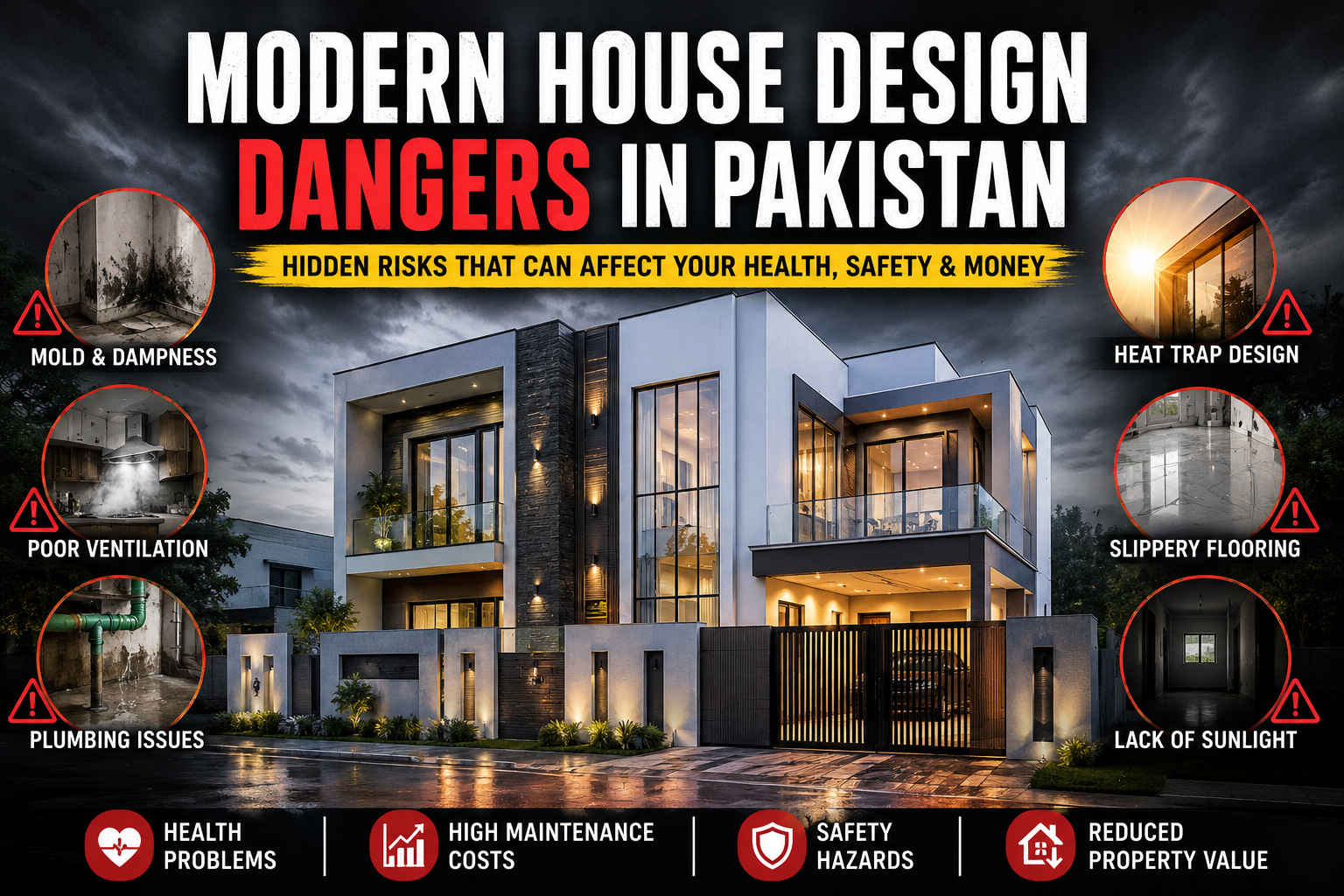
There is no doubt that Modern House Design Dangers Pakistan nowadays definitely look nicer than those that existed in the past. Clean exterior, glass-made buildings, an advanced design of the kitchen area, and grey color are among some other features of today’s houses. However, even though aesthetics is certainly present, Everything looks modern , luxury, and Instagram worthy
In addition to being a house where people live in, the house should also serve as a healthy habitat for its owners. If not, a house may very well affect the physical and psychological well-being of its inhabitants negatively.
Modern house design dangers Pakistan are hiding behind polished floors, glass walls and Instagram worthy interiors. Nobody talked about this at the architect’s office. Nobody talks about these problems during design discussion or at the title showroom.
Modern architecture often focuses heavily on appearance. Large glass elevations, flat roofs, open kitchens, glossy tiles, dark interiors, and closed room layouts may look impressive, but they are not always suitable for Pakistan’s climate and living conditions.
A successful house design should balance appearance with ventilation, sunlight, heat control, drainage, safety, privacy, and long-term maintenance. Ignoring these elements can increase electricity costs, create indoor air-quality issues, cause water damage, and reduce the comfort of family members.
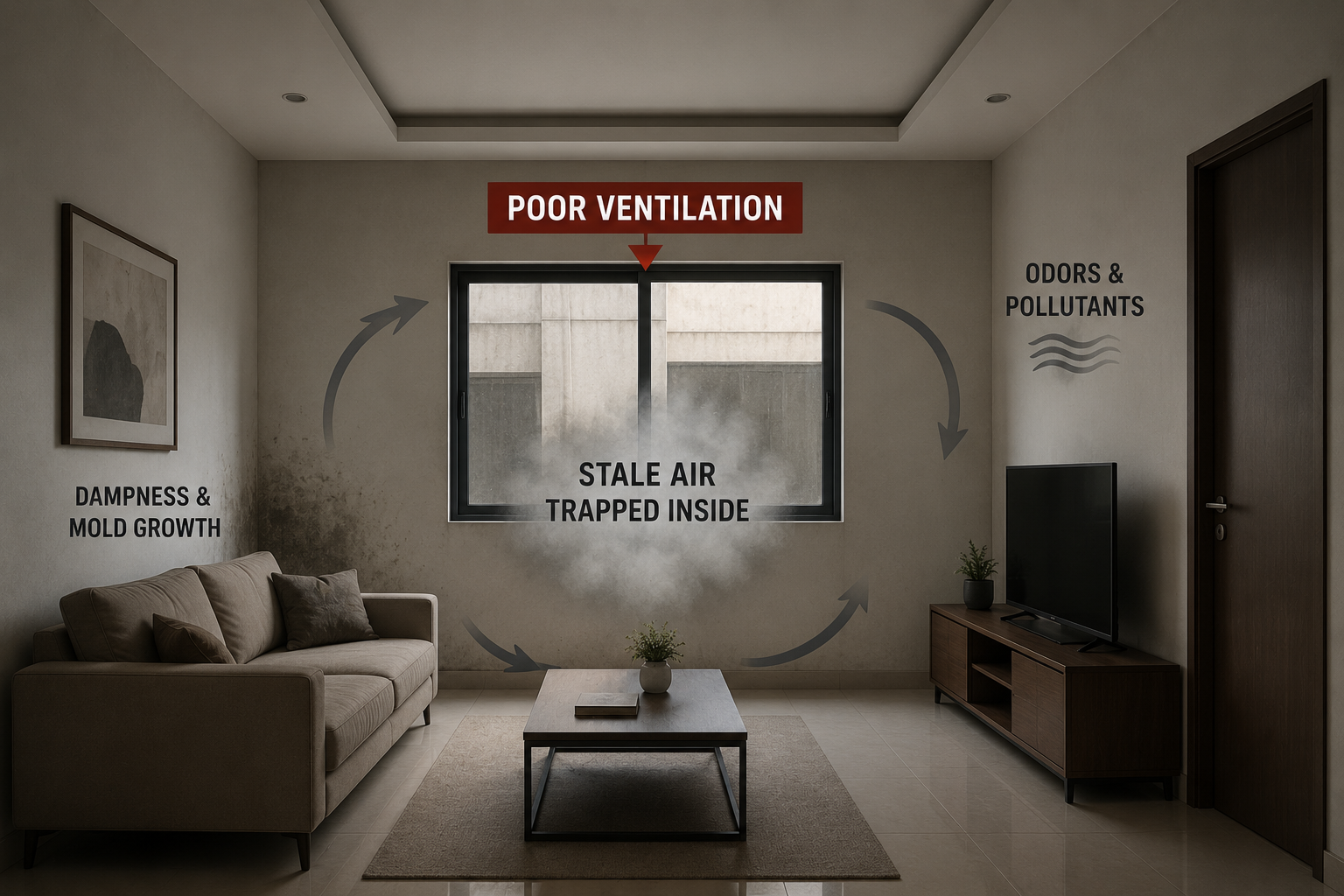
Poor ventilation is one of the most common house design problems in Pakistan. When windows are too small or rooms do not have openings on opposite sides, fresh air cannot circulate properly.
Closed rooms can trap cooking smoke, moisture, odors, dust, and indoor pollutants. This may make the house feel uncomfortable and can contribute to dampness and mold growth.
Plan windows on opposite walls wherever possible to create cross-ventilation. Install exhaust fans in kitchens and bathrooms, provide ventilation shafts for internal spaces, and avoid completely sealed rooms.
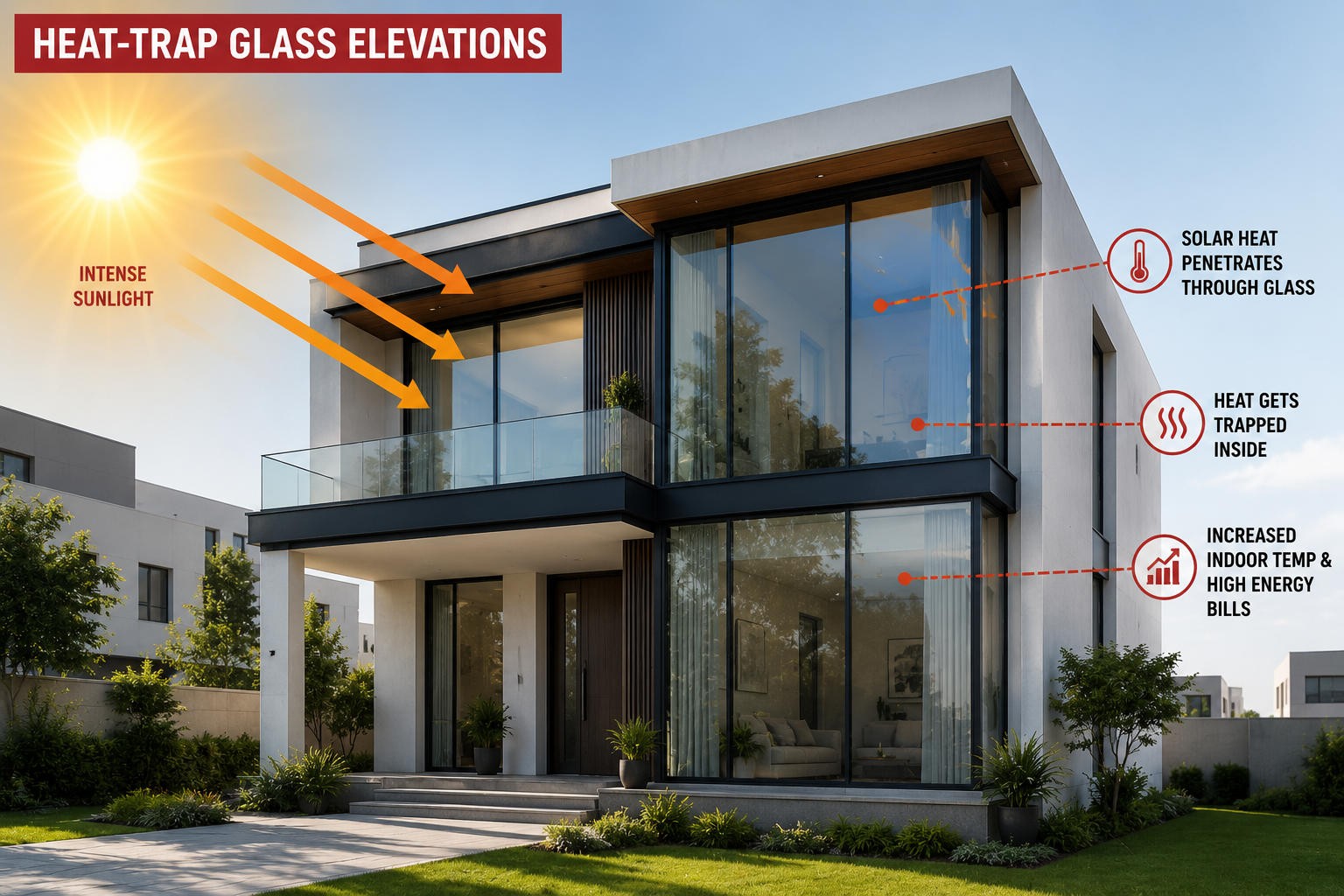
Large glass windows and full-glass elevations are increasingly popular in modern Pakistani homes. However, untreated glass allows significant solar heat to enter the building, especially on west-facing and south-facing elevations. This can make indoor spaces extremely hot during summer and increase dependence on air conditioning. It may also result in higher electricity bills and uncomfortable indoor temperatures.
Use double-glazed or energy-efficient glass, exterior shading, curtains, louvers, roof insulation, and properly sized windows. Large glass areas should be positioned according to the direction of sunlight.
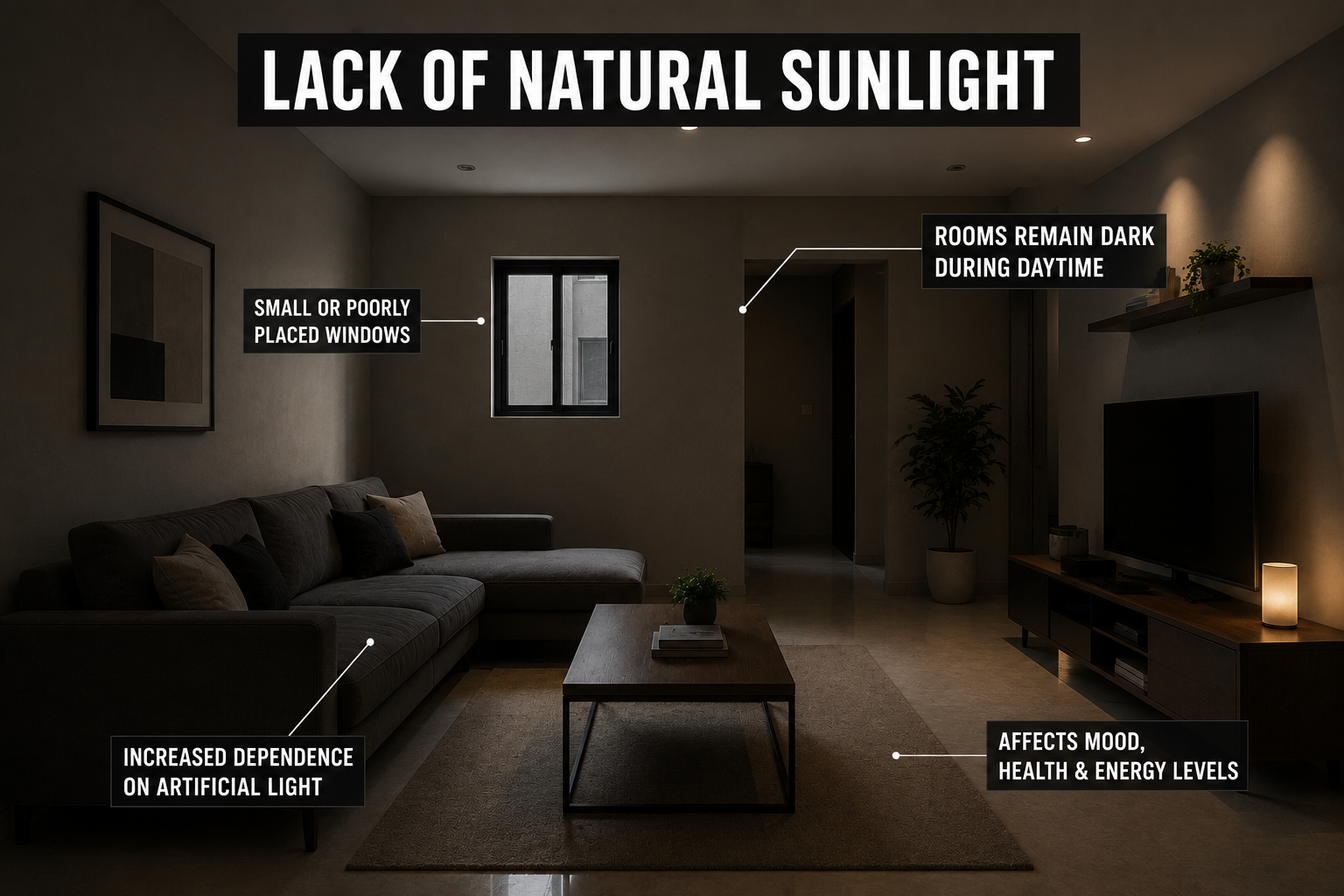
Some modern homes have dark corridors, internal rooms, and poorly positioned windows. Limited daylight can make interiors feel dull, uncomfortable, and dependent on artificial lighting throughout the day.
Natural sunlight also helps reduce indoor moisture and makes living spaces feel more open and welcoming.
Position bedrooms and living areas where they can receive balanced daylight. Use skylights, courtyards, ventilation shafts, glass doors, and light-colored interior finishes in darker areas.
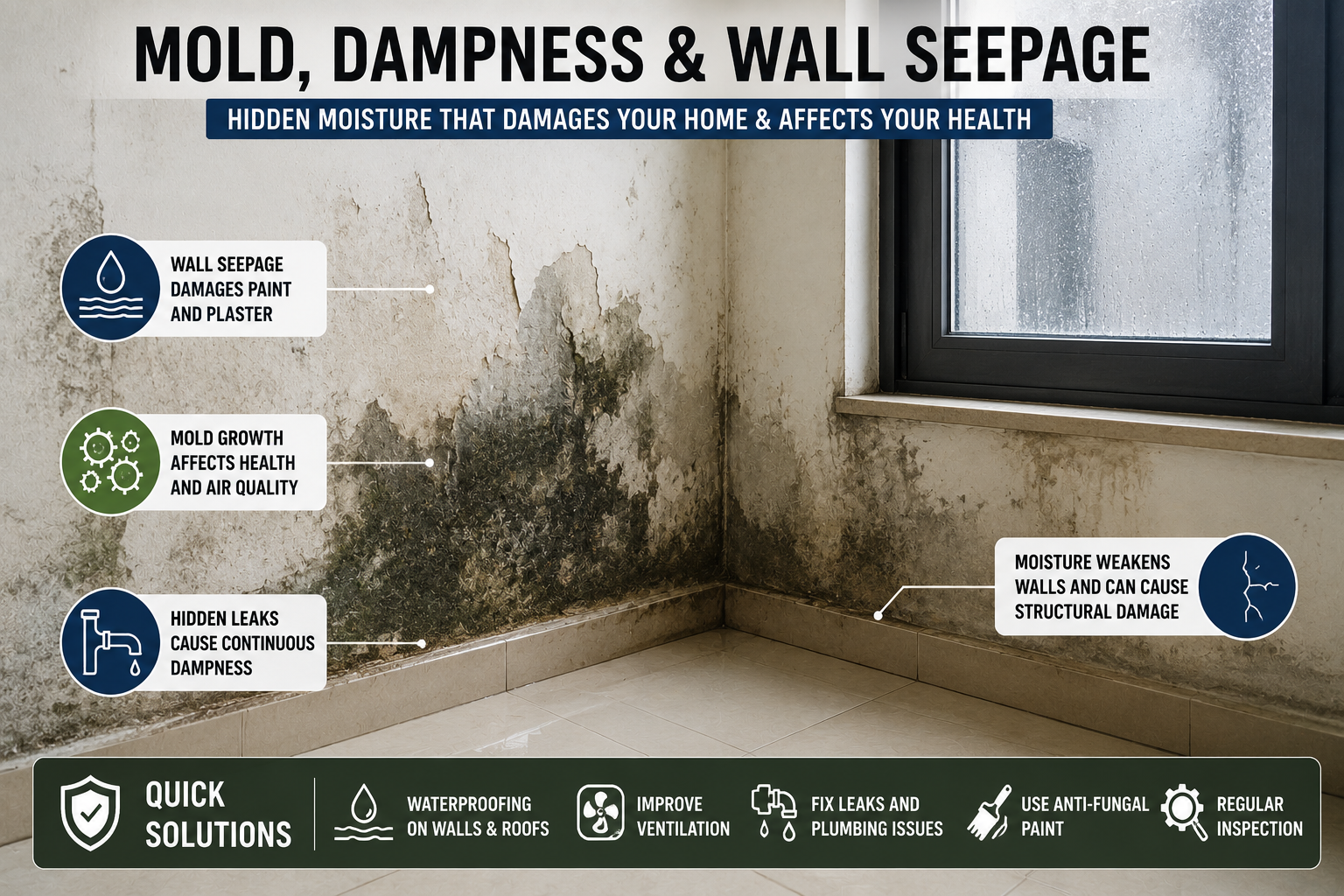
Damp walls and mold are major problems in houses where waterproofing, drainage, ventilation, or plumbing has been poorly planned. Water may enter through roofs, bathrooms, exterior walls, underground tanks, or leaking pipes.
Ignoring seepage can damage paint, plaster, furniture, electrical fittings, and the building structure. It may also create an unpleasant smell and unhealthy indoor environment.
Use proper damp-proofing, roof waterproofing, bathroom waterproofing, exterior weather protection, and high-quality plumbing materials. All water lines and drainage pipes should be pressure-tested before walls and floors are closed.
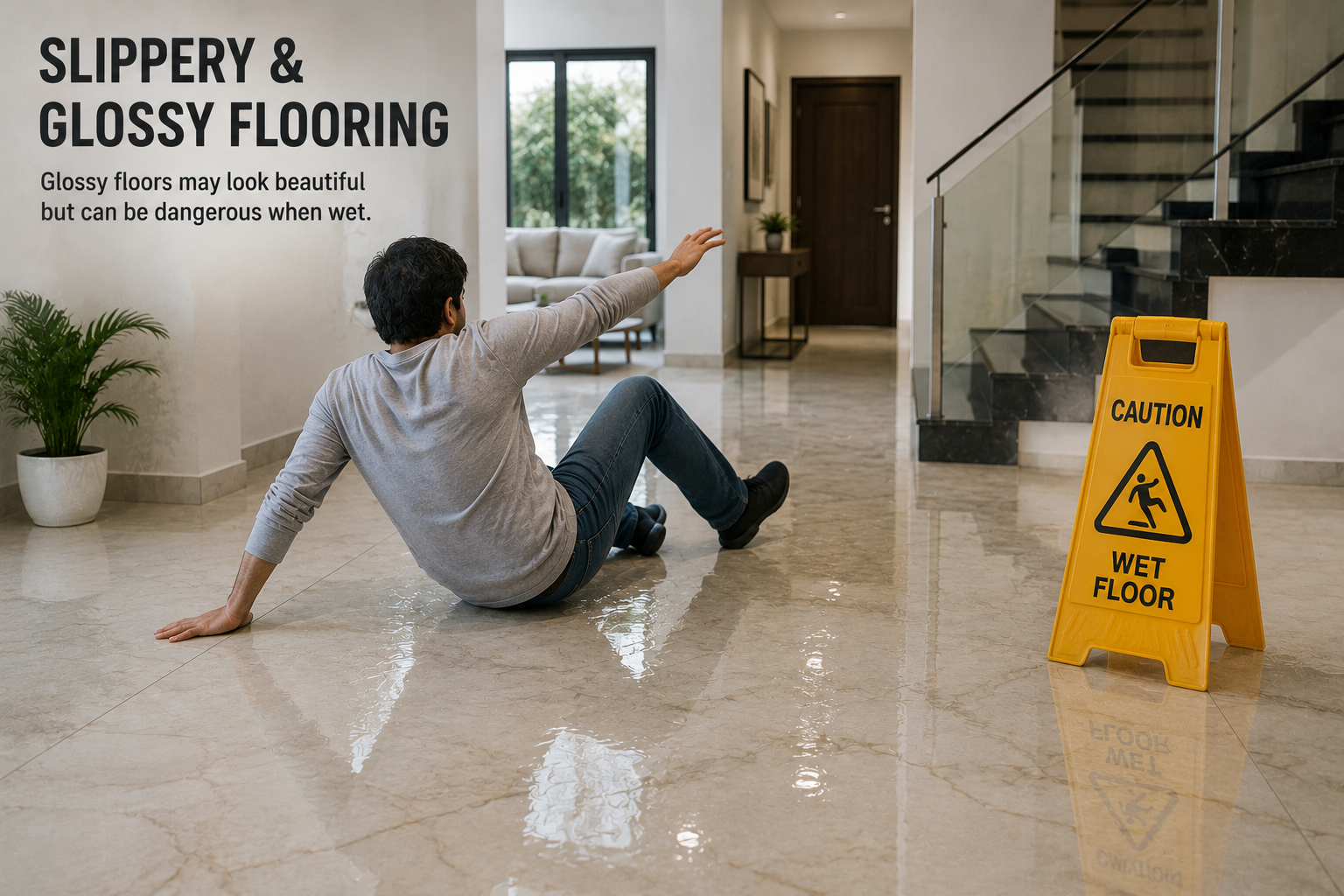
Highly polished marble and glossy tiles can look luxurious, but they may become dangerously slippery when wet. Bathrooms, kitchens, stairs, entrances, balconies, and outdoor areas require flooring with better grip.
Children, older adults, and people with mobility limitations face a greater risk of slipping and falling.
Use anti-slip or matte-finish tiles in wet areas. Add handrails on staircases, use textured flooring outdoors, and avoid sharp level changes between rooms.
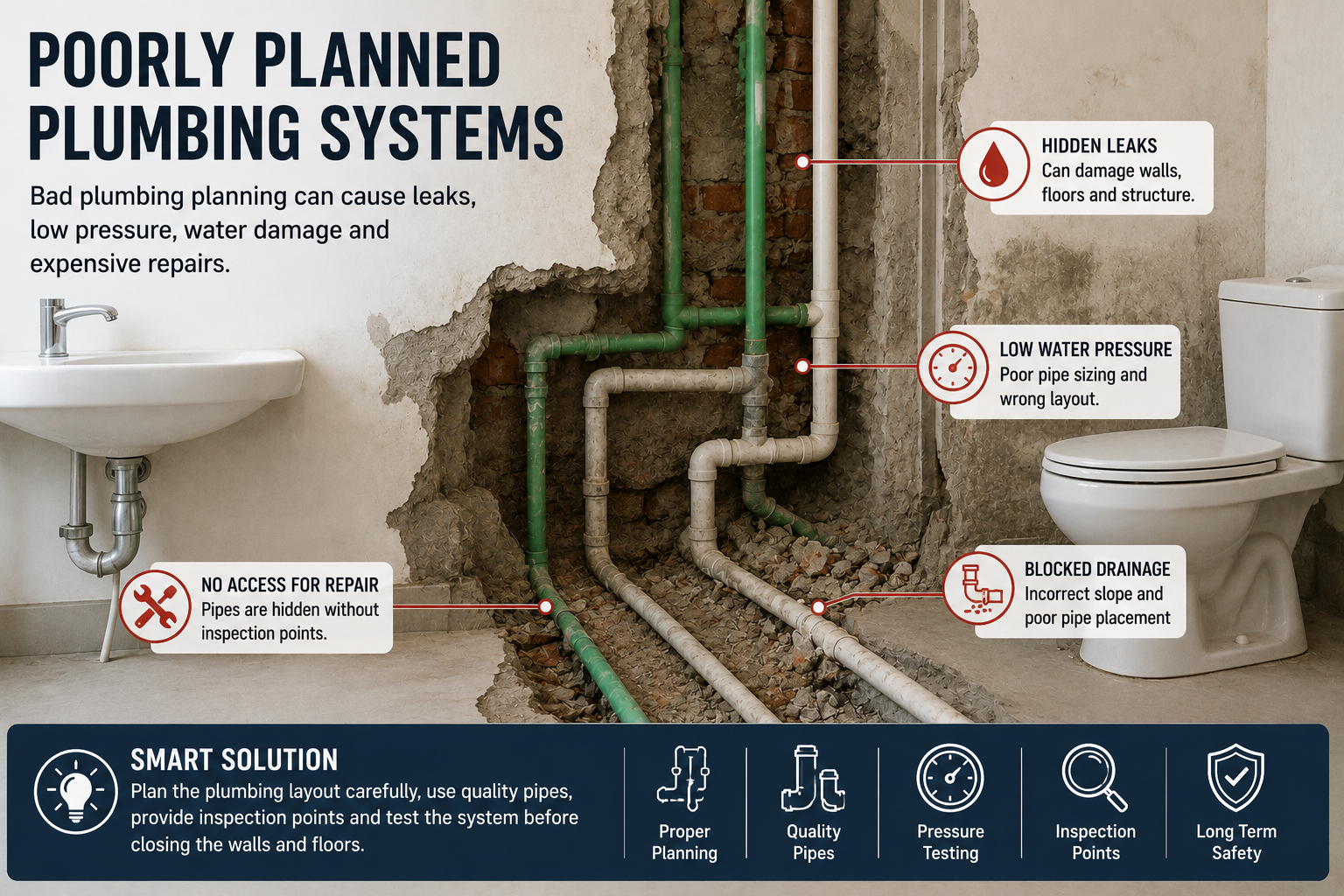
Hidden plumbing lines can become expensive to repair when pipes are installed without proper planning. Low-quality pipes, weak joints, incorrect slopes, and inaccessible connections can cause leaks, low water pressure, bad odors, and drainage problems.
A small concealed leak can damage ceilings, walls, flooring, and electrical systems before it becomes visible.
Use approved PPR, UPVC, or HDPE pipes according to their purpose. Keep inspection points accessible, prepare a plumbing layout, test the entire system, and avoid placing unnecessary pipe joints inside walls.
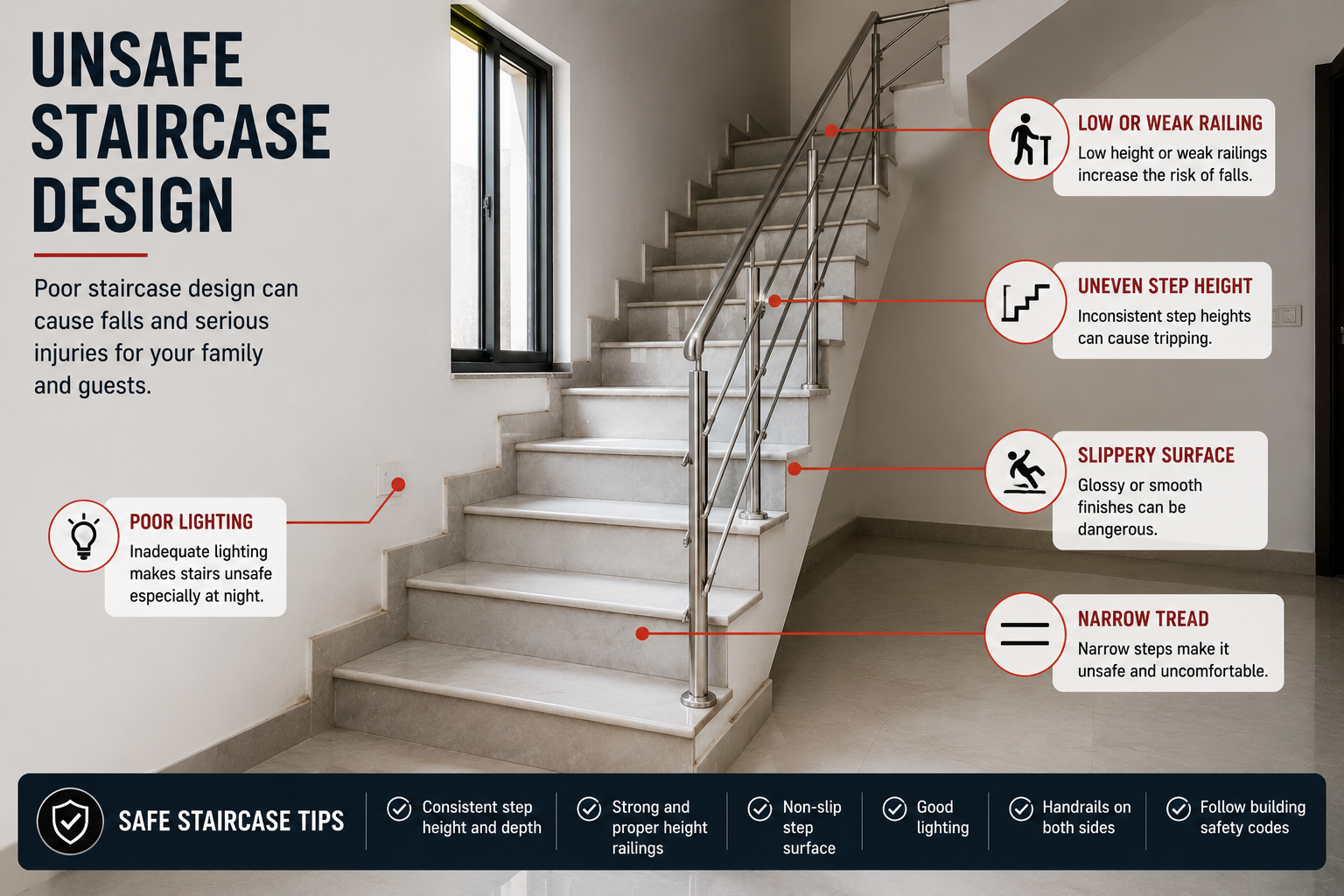
Modern staircases sometimes prioritize appearance over safety. Floating steps, low railings, uneven risers, narrow treads, and slippery finishes can create serious risks.
Stairs should be comfortable for children, adults, senior citizens, and visitors.
Use consistent step heights, sufficient tread depth, strong handrails, proper lighting, non-slip surfaces, and safe gaps between railing elements.
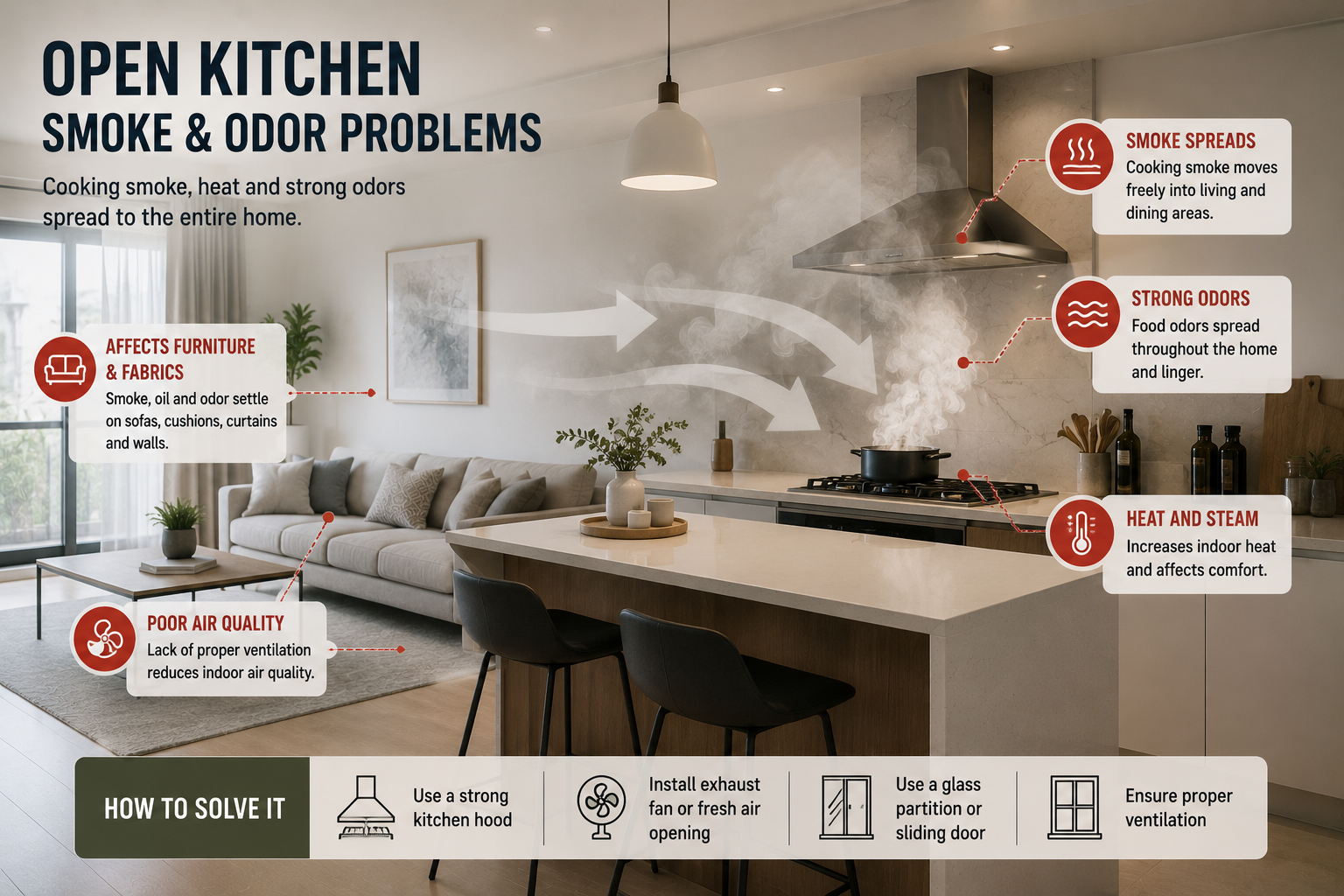
Open kitchens make homes appear larger, but they are not always suitable for heavy cooking. Oil, smoke, heat, steam, and strong food odors can spread into the living and dining areas.
Kitchen moisture and grease may also affect walls, ceilings, curtains, furniture, and air-conditioning systems.
Consider a semi-open kitchen with a glass partition or sliding door. Install a correctly sized kitchen hood, exhaust fan, fresh-air opening, and washable surfaces around cooking areas.
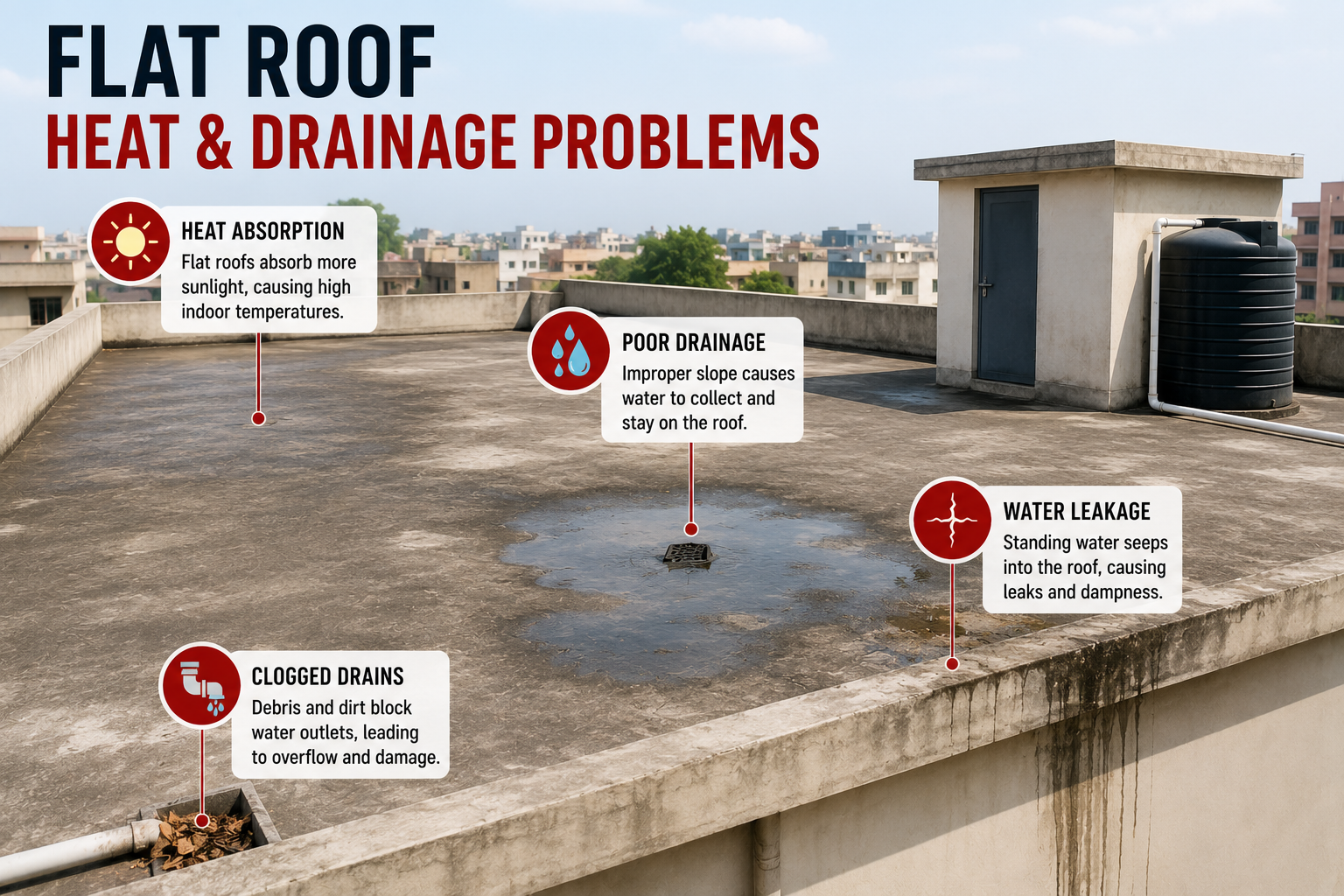
Flat roofs are common in Pakistan, but poor insulation and drainage can create serious problems. During summer, an exposed concrete roof absorbs heat and transfers it into upper-floor rooms.
During heavy rain, blocked or poorly positioned drains can cause standing water, leakage, seepage, and damage to roof finishes.
Use roof insulation, reflective coatings, proper waterproofing, drainage slopes, rainwater outlets, and regular roof maintenance.
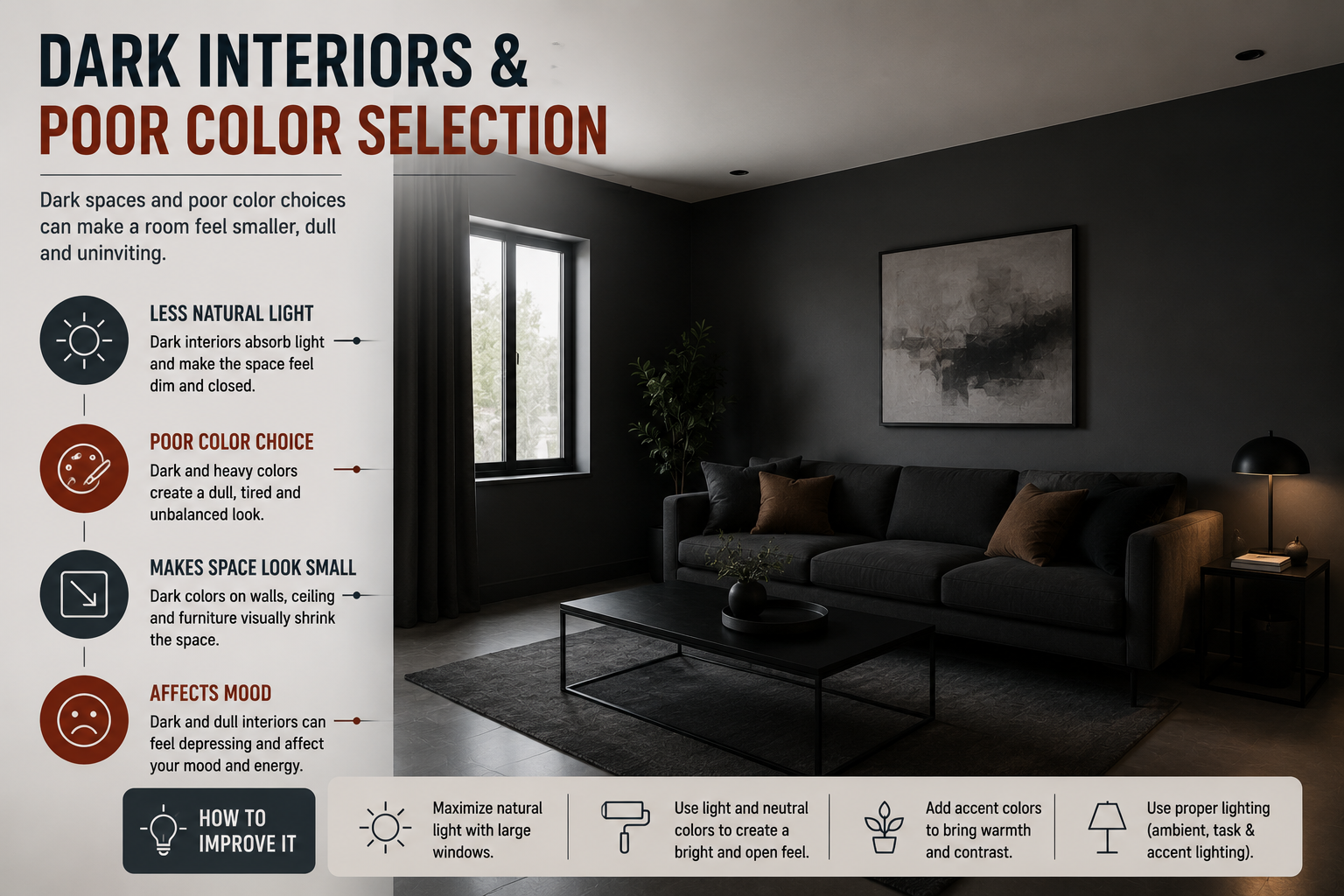
Dark walls, black ceilings, and heavily shaded interiors may look stylish in photographs, but excessive use of dark finishes can make rooms feel smaller and require more artificial lighting.
Dark exterior finishes may also absorb more heat when directly exposed to sunlight.
Use dark colors as accent elements rather than covering entire rooms. Combine them with light neutral shades, balanced daylight, reflective surfaces, and suitable artificial lighting.
| ⚠️ Dangerous Design Choice | ✅ Better Alternative |
|---|---|
| Full untreated glass elevation | Double-glazed glass with exterior shading |
| Closed rooms with poor airflow | Cross-ventilated room layout |
| Glossy bathroom tiles | Anti-slip matte finish tiles |
| Uninsulated concrete roof | Insulated and waterproof roof system |
| Completely open kitchen | Semi-open kitchen with exhaust hood |
| Hidden plumbing joints | Accessible inspection points |
| Dark internal rooms | Skylight or ventilation shaft |
| Low staircase railing | Strong, code-compliant handrails |
| Poor drainage slope | Proper roof and rainwater drainage |
| Cheap waterproofing materials | Professional waterproofing system |
Use this checklist before finalizing your house plan or starting construction.
Your house may have planning or construction problems if you frequently notice excessive indoor heat, high electricity bills, musty odors, wet walls, mold spots, dark rooms, poor airflow, slippery surfaces, kitchen smoke spreading through the house, or recurring plumbing leaks.
These signs should not be ignored because small design problems can turn into expensive repairs over time.
Recognizing these hidden dangers in modern construction, House Masters Pakistan is leading a shift toward “Health-First” architecture. We believe that a home should not just look luxurious; it must be a safe haven that promotes the physical and mental well-being of its residents.
While the industry often focuses solely on aesthetics, House Masters Pakistan actively addresses these challenges through:
Smart Climate Management: We design elevations that minimize heat absorption, reducing indoor temperatures naturally and lowering your energy costs.
Engineered Ventilation: Moving beyond basic windows, we implement strategic cross-ventilation systems that ensure fresh air reaches every corner of your home, preventing respiratory issues and mold growth.
Functional Safety Standards: From selecting high-quality non-slip materials to implementing leak-proof plumbing protocols, we eliminate hazards before they become a reality.
To help homeowners navigate these complex design decisions, we have discussed these critical problems and their practical solutions in detail in our latest podcast.
This is the heart of the problem. Most Modern Pakistani homes are designed to impress guests especially in the baithak area . Marble in every room, grand staircase , double-height ceilings with no insulation
Luxury vs. functional health is a real choice you make when you build. A functionally healthy home prioritizes airflow, sunlight, safe flooring, fire safety, and something almost nobody factors in hospital proximity. Modern House Design Dangers Pakistan Following the 10-minute rule, meaning your home should be within ten minutes of a hospital, can be the difference between life and death in a medical emergency. Modern house design dangers in Pakistan are not just about comfort some of them are genuinely life-threatening.
The most expensive tile in the world cannot make up for a home that makes your family sick, anxious, or unsafe. Modern house design dangers in Pakistan are real and most of them are completely avoidable with a little awareness before you build or renovate.
Ask better questions. Modern House Design Dangers Pakistan Demand functional design. And remember: a beautiful home that keeps your family healthy is the real dream worth building.
Thinking of building or renovating your home in Pakistan? Don’t make costly mistakes. Visit thehmpd today and get expert guidance on designing a home that is beautiful, safe, and healthy for your family.
A beautiful house should also be safe, comfortable, energy-efficient, and easy to maintain. House Masters Property Developers helps homeowners plan modern residences specifically designed for Pakistan's climate, lifestyle, and family requirements.
Whether you're planning a 5 Marla, 10 Marla, 1 Kanal, or a custom luxury residence, our experienced team provides complete support with architectural planning, construction management, premium material selection, ventilation planning, waterproofing solutions, and complete project execution.
Contact House Masters Property Developers today and let our experts help you design and build a safer, healthier, and more energy-efficient home for your family.
📞 Book a Free ConsultationYes. Glass elevations can be used, but they should include energy-efficient double-glazed glass, external shading, roof insulation, and proper orientation to reduce indoor heat and improve energy efficiency.
Poor ventilation is one of the biggest design mistakes because it affects indoor comfort, moisture control, air quality, and cooling efficiency throughout the year.
You can reduce indoor heat by using roof insulation, reflective roof coatings, double-glazed windows, external shading, cross-ventilation, and light-colored exterior finishes.
Matte-finish or anti-slip tiles with proper grip are much safer than highly polished glossy tiles, especially in wet areas like bathrooms.
A semi-open kitchen is usually a better choice because it controls smoke, cooking odors, grease, and indoor heat while still maintaining a modern appearance.
Professional waterproofing, proper roof drainage, quality plumbing materials, pressure testing, and regular maintenance can significantly reduce seepage problems.
Natural light improves indoor comfort, reduces electricity consumption during the day, controls moisture, and creates a healthier and more pleasant living environment.
Large untreated glass windows, poor insulation, inadequate ventilation, excessive indoor heat, and inefficient cooling systems can significantly increase electricity costs.
41k, Block K, Gulberg 3, Lahore, Pakistan
P: 0324 2827883
E: info@thehmpd.com