
Inside Co-Working Culture in Pakistan: More Than Just Desks & Wi-Fi
Getting to work used to entail spending a lot of time in a cubicle and driving a long way. In Pakistan’s main cities, such Karachi, Lahore, and Islamabad, a silent revolution is transforming the way people work.
The co-working culture is a new trend in shared, flexible workspaces that affects how we think about “going to the office.” These areas have become creative hubs for working together, coming up with new ideas, and developing communities as more and more people start businesses, work online, and start their own companies.
In Pakistan, co-working is no longer simply about having a desk and Wi-Fi. It’s about being creative, having friends, and culture. People in the country are working differently now that their way of life has changed.
More and more people in Pakistan are working in groups.
People in Pakistan hardly ever worked together ten years ago. A lot of professionals are choosing shared workspaces these days because they want to operate in a different environment than the traditional office.
Freelancers, small enterprises, startups, and even corporate teams like co-working spaces because they are affordable, flexible, and a wonderful way to meet new people.
As Pakistan’s digital economy increases and more young people start working, co-working has gone from being a niche experiment to a regular approach for professionals in various sectors to get work done.
A collection of persons that desire to work together
People feel like they belong when they work together in co-working environments.
People from diverse disciplines work together in co-working spaces in Pakistan, which is distinct from normal offices. A designer may collaborate with a software developer, while a content writer could locate clients just a few desks away. These chance meetings often result in new enterprises, partnerships, and projects.
Co-working spaces in Pakistan is more than just sharing an office; it’s also about sharing ideas, creativity, and chances.
Being flexible instead of strict
People can now work from home, the office, or both. They can select when, where, and how to work together.
You can rent a desk, an office, or a conference room for a day, a month, or even just a few hours. Because of this flexibility, freelancers and new enterprises don’t have to sign long-term contracts or pay a lot of money for administrative expenditures.
This flexibility is incredibly crucial, especially in Pakistan’s fragile economy, because it keeps professionals affordable, adaptable, and able to expand.
Made to get people to do things, not just do them.
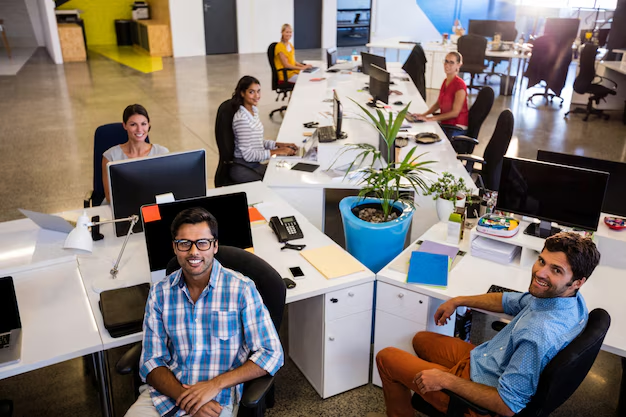
The co-working spaces in Lahore,co-working spaces in Karachi, and co-working spaces in Islamabad are more than just places to work; they are also meant to inspire. These workplaces aren’t boring and corporate. They are bright and imaginative, with lots of natural light, open areas, and good furnishings.
For instance, co-working spaces in Lahore provide quiet areas for working, open lounges for brainstorming, and cafe areas for meeting new people.
These facilities don’t simply let people work; they also make them think, move, and come up with fresh ideas.
Strengthening the startup scene in Pakistan
A key component of making Pakistan’s startup industry stronger has been people working together.
Business owners can rent cheap office space, hold events, get advice from mentors, and meet with investors in these shared workspaces. In Lahore and Karachi, several enterprises that operate together have developed from tiny groupings to fully funded companies.
Co-working is making it easier for businesses to make their ideas come true and for more people in Pakistan to start their own businesses by making it easier for them to work together.
Having a welcoming and diverse workplace
People from all walks of life can now work together in safe and friendly co-working environments. This is especially true for women who are creative, own their own enterprises, or work for themselves.
They help diversity thrive by making sure that everyone can get to jobs and facilities. In Pakistan, women-only co-working spaces have helped women feel safe and supported while they work on their jobs in the last few years.
This openness reveals that those who work in Pakistan are quite modern and forward-thinking.
Outside of Work: Building a Life
There are more motivations to cooperate together than only to do tasks. Many places offer professional training sessions, art displays, networking events, and activities for health and wellness. All of these factors help to create a work-life balance.
In Pakistan, co-working is a change from thinking of work as a drudgery to thinking of it as a way of life that promotes balance, creativity, and personal growth. It’s not simply where you work; it’s also how you feel while you’re there.
The most important thing is technology.
Smart technology makes modern co-working spaces work. High-speed internet, biometric access, digital booking systems, and AI-based management tools make everything function smoothly.
Some co-working spaces in areas like Lahore utilize smart lighting and other equipment that uses less energy, which is excellent for the environment.
This digital-first plan works nicely with Pakistan’s current tech revolution, which is why co-working is a great option for digital professionals right now.
Problems and what to do next
There are still challenges with co-working in Pakistan, like slow internet, bad infrastructure, and people in smaller cities not knowing how to do it.
But the need is getting stronger. As co-working trends in Pakistan shift toward hybrid models, shared offices are starting to crop up in smaller cities like Faisalabad, Multan, and Peshawar. This makes it easier for people from all across the country to get to work.
The next stage is to link co-working spaces in malls, universities, and parks so that people may share ideas. In the future, this will revolutionize how people work in Pakistan.
The Future of Work: Intelligent, Collaborative, and Social
Co-working isn’t just a passing trend; it’s how things will be in the future. The move toward shared and flexible workplaces will only speed up as Pakistan’s workers become increasingly younger, more connected, and more independent.
Co-working can give you more than just an office if you work for yourself in Karachi, are creative in Lahore, or own a business in Islamabad. It enables people to meet new people, work together, and find new opportunities.
Co-working spaces are altering what it means to be successful in Pakistan’s employment market by making work a fun, smart, and long-lasting experience that everyone can enjoy.
Frequently Asked Questions (FAQs)
More and more people in Pakistan are using co-working spaces because they are cheap, flexible, and a wonderful way to meet new people. This setup is perfect for freelancers, small firms, and hybrid teams that want professional locations but don't want to be stuck in them for a long period.
Islamabad, Karachi, and Lahore are the three biggest cities. People who know a lot about technology and design can find the greatest places to work together in Lahore. A lot of young people are beginning firms in Lahore, which is why co-working is growing increasingly popular there.
Hybrid work methods, offices for women, sustainability, and tech-enabled office administration are some of the most noteworthy advances in co-working in Pakistan. Many places are now introducing initiatives to assist folks meet new people and become in shape.
People can get more involved in their communities at co-working spaces than at normal enterprises. They help people think of fresh ideas by letting them work together and taking away the worry of long leases and huge up-front fees.