Inflation vs Real Estate in Pakistan: Why Property Remains a Smart Investment in 2026
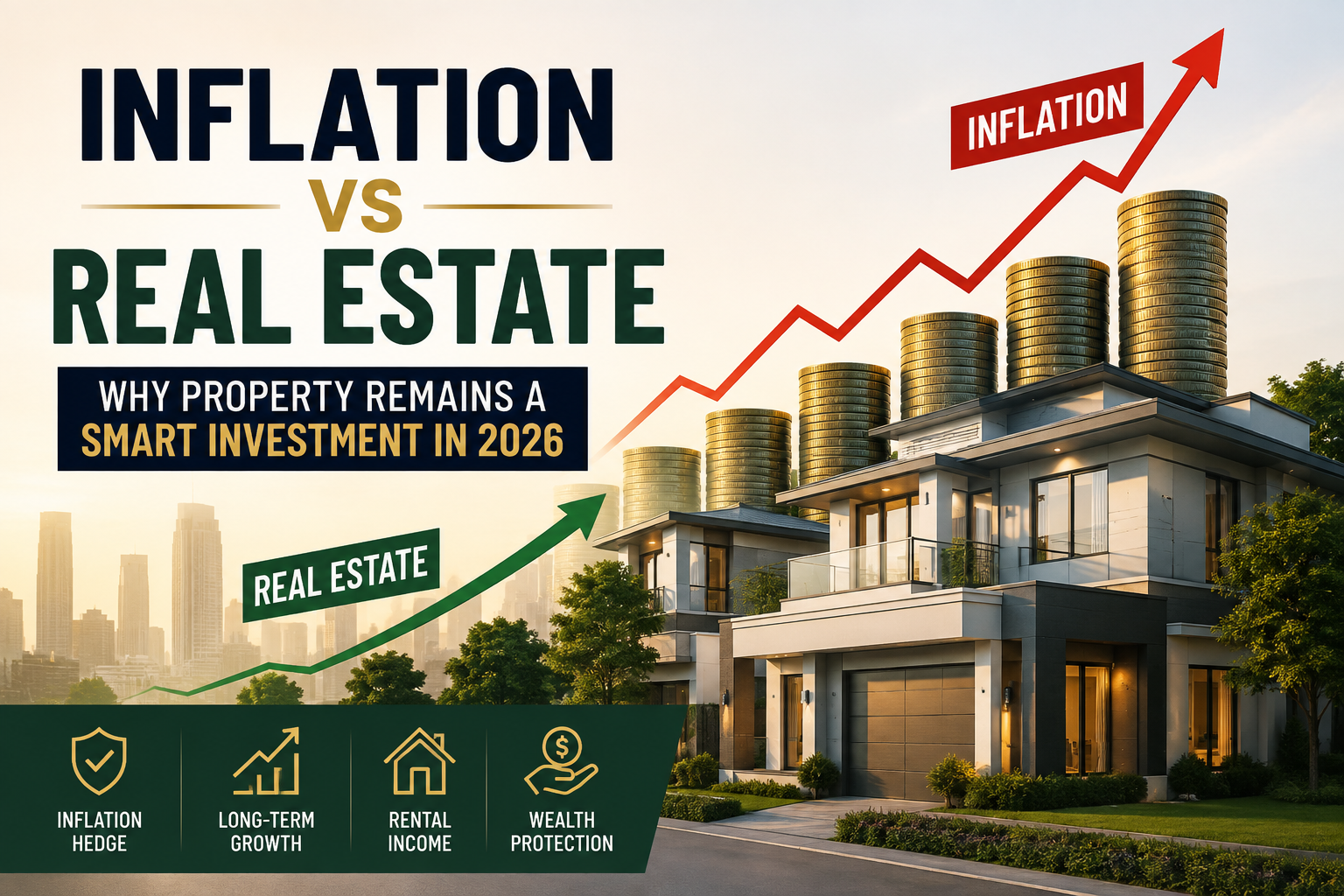
Pakistan’s economy has experienced significant inflation over the past few years, Inflation vs Real Estate in Pakistan affecting almost every aspect of daily life. From grocery prices and fuel costs to construction materials and labour charges, nearly every expense has increased. This has created uncertainty among homebuyers, investors, and businesses, leaving many people wondering whether real estate is still a smart investment.
One of the biggest questions property investors ask is:
Should I keep cash, or should I invest in real estate during inflation?
While inflation reduces the purchasing power of money, real estate has historically been considered one of the strongest long-term assets for preserving wealth. Property values, rental income, and land prices often increase over time, making real estate an attractive option for investors looking to protect their capital.
At The HM Property Developers, we understand that inflation creates financial pressure for both buyers and developers. Instead of simply passing every cost increase to customers, strategic planning, efficient project management, and value-driven decisions can help reduce the impact of rising prices while maintaining quality and customer confidence.
In this guide, we explain how inflation affects Pakistan’s property market, why real estate continues to attract investors, and how smart investment decisions can help protect your wealth during uncertain economic conditions.
Understanding Inflation vs Real Estate in Pakistan
Inflation refers to the continuous increase in the prices of goods and services over time. As inflation rises, the purchasing power of money decreases, Inflation vs Real Estate in Pakistan meaning the same amount of money buys fewer products and services than before.
In Pakistan, inflation affects almost every sector of the economy, including:
- Construction materials
- Fuel prices
- Steel and cement
- Labour wages
- Transportation
- Utility bills
- Property development costs
For ordinary households, inflation increases monthly expenses. For developers, it raises construction costs. For investors, however, inflation can also create opportunities particularly in the real estate sector.
Unlike cash, which loses value over time well located property has historically shown the ability to appreciate, making it an attractive hedge against inflation.
How Inflation Affects the Real Estate Market
Inflation does not impact only one part of the property sector. It influences land prices, construction costs, Inflation vs Real Estate in Pakistan rental income, financing, and buyer behaviour.
As the cost of building materials increases, developers face higher project expenses. Cement, steel, bricks, electrical equipment, plumbing materials, glass, tiles, and transportation all become more expensive. These increased costs are often reflected in the prices of residential and commercial properties.
However, higher construction costs can also limit new supply. When fewer projects enter the market, demand for existing developed properties may increase, supporting long-term property values.
For investors, this creates an important opportunity: buying quality real estate before prices rise further can help preserve purchasing power.
How Inflation Influences Different Real Estate Factors
| Inflation Factor | Impact on Real Estate |
|---|---|
| Fuel Prices | Higher transportation and construction costs |
| Steel Prices | More expensive structural construction |
| Cement Prices | Higher building costs for residential projects |
| Labour Wages | Increased overall project expenses |
| Currency Devaluation | Property values often rise over time |
| Housing Demand | Greater interest in property as a long-term asset |
Why Real Estate Is Considered an Inflation Hedge
One of the biggest advantages of real estate is its ability to retain value over long periods. While cash can lose purchasing power during inflation, quality property often appreciates as replacement costs and market demand increase. Inflation and property prices in Pakistan
Several factors make real estate an effective inflation hedge:
- Limited land supply in prime locations
- Increasing construction costs
- Growing urban population
- Rising rental demand
- Long-term capital appreciation
- Tangible asset ownership
For these reasons, many experienced investors allocate a portion of their portfolio to residential or commercial real estate rather than relying solely on cash savings.
Expert Insight: Impact of inflation on real estate Inflation reduces the purchasing power of money, but strategically selected real estate can help preserve wealth and generate long-term value.
Why House Masters Chose to Absorb the Price Hike
During periods of rising inflation, many developers respond by immediately increasing property prices or reducing construction quality. However, a customer-focused approach can create long-term trust and stronger relationships.
At The HM Property Developers, the focus is on delivering value while carefully managing project costs through better planning and efficient execution.
Instead of relying only on price increases, developers can:
- Improve construction planning
- Reduce operational waste
- Negotiate efficiently with suppliers
- Optimize project scheduling
- Focus on long-term customer relationships
- Maintain quality standards
- Build investor confidence
This strategy not only helps buyers during difficult economic conditions but also strengthens brand reputation and customer loyalty over the long term.
Benefits of Investing in Real Estate During Inflation
Many investors consider property one of the safest long-term investment options during inflation because it combines asset ownership with the potential for appreciation and rental income.
Some key advantages include:
- Protection against declining purchasing power
- Long-term capital growth
- Potential rental income
- Physical asset ownership
- Diversification of investment portfolio
- Better wealth preservation than idle cash
- Strong demand in developing urban areas
As cities continue to expand and infrastructure improves, strategically located residential and commercial properties often benefit from increasing demand.
Risks of Investing in Real Estate During Inflation
Although real estate is often considered one of the safest long term investments, every investment carries some level of risk. During periods of inflation, Inflation vs Real Estate in Pakistan buyers should be even more careful when selecting a property.
Some common investment risks include:
- Buying property in an undeveloped location
- Investing in projects without proper approvals
- Purchasing at an inflated market price
- Choosing an inexperienced developer
- Ignoring legal documentation
- Poor future infrastructure planning
- Weak rental demand
The best way to reduce these risks is through proper research, legal verification, and selecting projects with strong long-term growth potential.
Good Investment vs Bad Investment
| Good Investment | Poor Investment |
|---|---|
| Approved Housing Society | Unapproved Project |
| Trusted Developer | Unknown Developer |
| Prime Location | Low Demand Area |
| Complete Documentation | Incomplete Legal Records |
| High Rental Demand | Limited Rental Potential |
| Future Infrastructure Growth | No Development Plans |
Investment Checklist Before Buying Property
Inflation vs Real Estate in Pakistan Before investing in any residential or commercial property, complete this checklist.
Property Investment Checklist
- ✔ Verify ownership documents
- ✔ Confirm society approvals and NOC status
- ✔ Compare current market prices
- ✔ Inspect development progress
- ✔ Check road connectivity
- ✔ Evaluate rental demand
- ✔ Review future infrastructure plans
- ✔ Verify utility availability
- ✔ Calculate your investment budget
- ✔ Consult a trusted real estate professional
Pros & Cons
Advantages
- Protects wealth against inflation
- Long-term capital appreciation
- Opportunity to earn rental income
- Tangible physical asset
- Portfolio diversification
- Growing demand in major cities
- Potential hedge against currency depreciation
Considerations
- Requires higher initial capital
- Property is less liquid than cash
- Market conditions can affect resale timing
- Legal verification is essential before purchase
- Returns depend on location and project quality
Is 2026 a Good Time to Invest in Pakistan Real Estate?
For long term investors, 2026 can still present attractive opportunities especially in well developed and legally approved projects. Cities like Lahore, Islamabad, and selected emerging locations continue to attract residential and commercial investment due to infrastructure development and population growth. Inflation vs Real Estate in Pakistan
Rather than trying to time the market successful investors usually focus on:
- Prime locations
- Reputable developers
- Strong legal documentation
- Long-term holding strategy
- Areas with future infrastructure improvements
Expert Investment Tips
To maximize returns during inflation:
- Invest in approved housing societies.
- Choose locations with strong infrastructure.
- Focus on long-term growth rather than short-term speculation.
- Diversify between residential and commercial assets if suitable.
- Keep emergency cash instead of investing all available funds.
- Review market trends before making a purchase.
Final Thoughts
Inflation creates challenges, but it also highlights the importance of owning assets that have the potential to preserve value over time. While no investment is completely risk-free, carefully selected real estate has historically remained one of the preferred choices for long-term wealth preservation.
Instead of making emotional decisions based on short-term market changes, investors should evaluate location, legal status, infrastructure, rental demand, and future development potential. A disciplined, research-based approach can help reduce risk and improve the likelihood of achieving long-term financial goals.
Frequently Asked Questions
Answers to common questions about inflation, real estate investment in Pakistan, property prices, rental income, construction costs and long-term investment decisions.
Real estate is often considered a useful long-term asset during inflation because property values and rental income may rise over time. However, investment performance depends on location, legal status, market demand, development quality, and the price paid by the investor.
Inflation can increase the cost of land development, construction materials, labour, transportation, and utilities. When the cost of building new properties rises, replacement costs and asking prices may also increase.
Cash may lose purchasing power during inflation, while carefully selected real estate may preserve value over the long term. The better choice depends on your financial goals, emergency cash requirements, investment horizon, and risk tolerance.
Inflation can increase the prices of cement, steel, bricks, electrical equipment, plumbing materials, fuel, transportation, and labour. These higher expenses can make new residential and commercial construction more costly.
Rental income may increase in high-demand areas as general living costs and property values change. Actual rental growth depends on location, property condition, available supply, tenant demand, and prevailing market rates.
There is no single property type that always performs best. Residential properties may benefit from stable housing demand, while commercial properties may provide stronger income potential in good business locations. Legal status and location remain more important than property type alone.
Lahore continues to attract property investors because of its large population, expanding road network, established housing communities, commercial activity, and ongoing urban development. Buyers should still evaluate each location and project independently.
Real estate is a tangible asset with limited land supply in desirable locations. Property values and rents may adjust over time as construction costs, demand, and general prices rise, which can help preserve purchasing power over a long investment period.
Verify ownership documents, project approvals, NOC status where applicable, transfer procedures, current dues, development progress, utilities, road access, market prices, and the reputation of the developer or seller before making payment.
Inflation can reduce household purchasing power while increasing property construction costs and financing expenses. This may make home ownership more difficult for some buyers and increase demand for smaller homes or flexible payment options.
Commercial property may provide higher rental returns in strong business locations, while residential property often benefits from broader housing demand. Investors should compare purchase price, rental yield, vacancy risk, location, and resale demand before choosing.
High-demand locations with good road connectivity, utilities, schools, commercial activity, and future infrastructure plans can be more resilient because they continue attracting buyers and tenants even when overall market conditions become challenging.
Yes. Overseas Pakistanis can consider property investment, but they should verify legal documents, market prices, transfer procedures, and the exact property through reliable local professionals before transferring funds.
Investors can reduce risk by diversifying their investments, verifying legal documentation, selecting established locations, comparing market prices, avoiding unrealistic profit promises, and maintaining a long-term investment strategy.
Real estate generally requires time for infrastructure development, rental growth, market demand, and capital appreciation to create value. Investors who choose suitable properties and hold them for longer periods may be better positioned to benefit from these factors.

Our Services
Contact
41k, Block K, Gulberg 3, Lahore, Pakistan
P: 0324 2827883
E: info@thehmpd.com