Impact of Global Warming on Pakistan
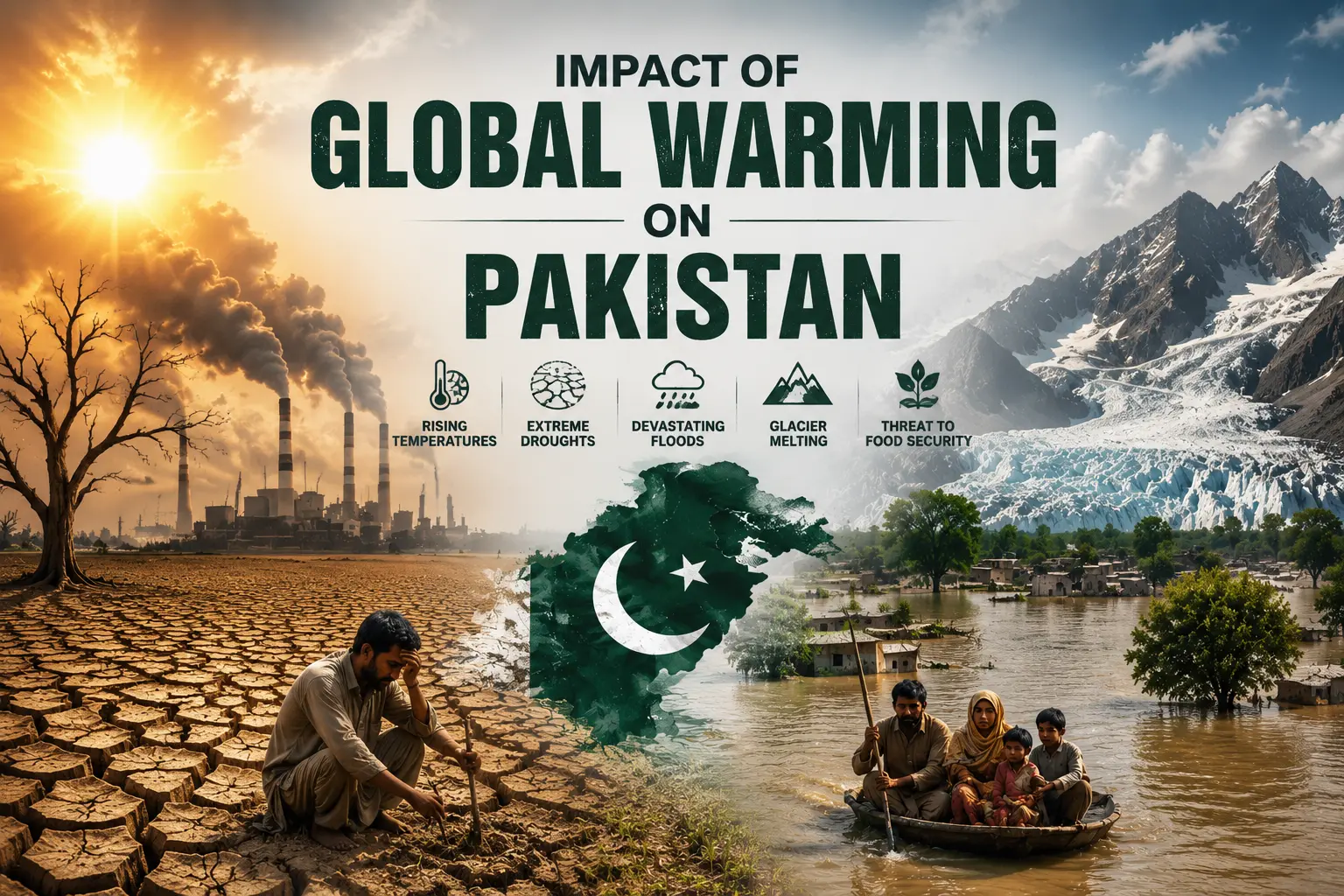
Impact of Global Warming on Pakistan: Causes, Effects and Solutions
Pakistan is highly exposed to the effects of global warming despite contributing only a small share of global greenhouse-gas emissions. Rising temperatures, destructive floods, irregular monsoon rainfall, prolonged droughts and accelerated glacier melt are affecting communities across the country.
The 2022 floods affected around 33 million people and demonstrated how climate-related hazards can damage homes, agriculture, infrastructure, public health and livelihoods on a national scale. Understanding the impact of global warming on Pakistan is therefore essential for improving disaster preparedness, water security, food production and climate-resilient development
What Is Global Warming?
Global warming is the long-term rise in Earth’s average temperature, mainly caused by greenhouse-gas emissions from burning fossil fuels, deforestation, transport, industry and other human activities.
Global warming changes rainfall patterns, increases the intensity of heatwaves and affects glaciers, oceans and ecosystems. In Pakistan, these changes are especially serious because much of the country’s agriculture, drinking water and economy depend on the Indus River system, seasonal monsoon rainfall and mountain glaciers.
Major Causes of Global Warming in Pakistan
Although global warming is a worldwide problem, several local activities increase greenhouse-gas emissions and make environmental conditions worse in Pakistan.
Dependence on Fossil Fuels
Pakistan continues to depend on oil, gas and other fossil fuels for electricity, transportation and industrial activity. Burning these fuels releases carbon dioxide and other pollutants into the atmosphere.
Deforestation and Loss of Green Areas
The removal of forests and urban green spaces reduces the environment’s ability to absorb carbon dioxide. Deforestation also increases soil erosion, raises local temperatures and makes communities more vulnerable to floods and landslides.
Vehicle and Industrial Emissions
Rapid urban growth has increased road traffic, fuel consumption and industrial emissions. These sources contribute to greenhouse gases as well as harmful air pollution in major cities.
Unplanned Urban Development
Concrete surfaces, reduced vegetation and dense construction can trap heat and create an urban heat-island effect. Poor drainage and construction in vulnerable areas can also increase flood damage during intense rainfall.
Agricultural Practices and Waste
Methane from livestock, unmanaged waste and some agricultural practices also contributes to greenhouse-gas emissions. Improving waste management and adopting climate-smart farming can reduce part of this impact.
Major Effects of Global Warming on Pakistan
More Frequent and Intense Heatwaves
Rising temperatures are increasing the frequency and severity of heatwaves across Pakistan. Extreme heat creates serious risks for children, older people, pregnant women, outdoor workers and people without reliable access to electricity or cooling.
UNICEF warns that high temperatures expose children in Pakistan to heat stress and can affect their health, development and ability to attend school.
Severe Floods and Irregular Monsoon Rainfall
A warmer atmosphere can hold more moisture, increasing the possibility of intense rainfall. Combined with weak drainage systems, development in flood-prone areas and limited disaster preparedness, heavy monsoon rainfall can cause major urban and river flooding.
Pakistan remains vulnerable to multiple climate hazards, including floods, heatwaves, droughts, cyclones, landslides and sea-level rise.
Glacier Melt and Glacial-Lake Floods
Rising temperatures are affecting mountain glaciers and increasing the risk of glacial-lake outburst floods in northern Pakistan. These sudden floods can damage roads, bridges, homes, farmland and tourism-dependent communities.
In the longer term, changes in glacier and snow melt may also affect the timing and reliability of water entering the Indus River system.
Drought and Water Scarcity
Some regions face repeated flooding while others experience prolonged dry periods. Irregular rainfall, groundwater depletion, inefficient irrigation and rising demand are placing increasing pressure on Pakistan’s water resources.
Water scarcity can affect households, industry, hydropower production and agricultural communities that depend on predictable irrigation supplies.
How Global Warming Is Hitting Agriculture, Health, and the Economy
Impact of Global Warming on Agriculture in Pakistan
Agriculture is highly sensitive to changes in temperature, rainfall and water availability. Heatwaves can damage crops during critical growing stages, while floods can submerge farmland, destroy stored grain, kill livestock and delay the next planting season.
Important crops such as wheat, rice, cotton and sugarcane may be affected by:
- Extreme temperatures
- Irregular monsoon rainfall
- Flooding and waterlogging
- Drought and irrigation shortages
- Soil erosion and salinity
- Increased pests and crop diseases
Research on the 2022 floods found major effects on crops and delays in subsequent agricultural activity, particularly in heavily affected regions such as Sindh. These disruptions can reduce farmers’ incomes and increase risks to national food security.
Health Effects of Climate Change in Pakistan
Climate change affects public health directly through heatwaves and indirectly through polluted water, disease outbreaks, food insecurity and poor air quality.
Major climate-related health risks include:
- Heatstroke, dehydration and exhaustion
- Respiratory problems linked with polluted air
- Diarrhoea, cholera and other waterborne diseases after floods
- Increased risk of dengue and malaria in suitable conditions
- Malnutrition caused by damaged crops and rising food prices
- Anxiety and trauma among repeatedly displaced families
Children are particularly vulnerable because extreme heat and pollution can affect their developing brains, lungs and immune systems. UNICEF describes children in Pakistan as being at extremely high risk from the climate crisis.
Economic Impact of Global Warming on Pakistan
Climate-related disasters create major costs for households, businesses and the government. Floods and extreme weather can destroy roads, bridges, schools, hospitals, electricity systems, houses, commercial buildings and farmland.
The World Bank has warned that, without strong climate action and adaptation, climate and environmental risks could substantially reduce Pakistan’s economic output by 2050. These losses may result from declining agricultural productivity, heat-related reductions in labour performance, damaged infrastructure, worsening health conditions and repeated disaster-recovery expenses.
Lower-income communities are usually hit hardest because they often have fewer savings, limited insurance and less access to secure housing or reliable public services.
Impact on Pakistani Cities and Infrastructure
Climate change is creating additional pressure on rapidly growing cities such as Lahore, Karachi, Islamabad, Rawalpindi and Peshawar. Heavy rainfall can overwhelm drainage systems, while long heatwaves increase electricity demand and place pressure on water supplies.
Buildings and urban communities can become more resilient through:
- Improved stormwater drainage
- Heat-resistant and energy-efficient building design
- Rooftop solar-energy systems
- Increased tree cover and shaded public spaces
- Permeable surfaces that absorb rainwater
- Avoiding construction in high-risk flood zones
- Regular inspection of roofs, foundations and drainage systems
Climate-resilient urban planning can help protect residents, properties and public infrastructure as weather conditions become more unpredictable.
Impact on Wildlife and Ecosystems
Pakistan’s biodiversity is being quietly eroded. Rising temperatures and shifting landscapes are shrinking habitats for species including:
- Snow leopards
- Indus river dolphins
- Migratory bird populations
Changing temperatures, water shortages, floods and habitat loss also threaten Pakistan’s wildlife and natural ecosystems. Mountain, river, wetland, coastal and forest habitats all depend on relatively stable environmental conditions.
When ecosystems deteriorate, people can also lose important benefits such as clean water, fertile soil, natural flood protection, fisheries and pollination. Protecting forests, wetlands, mangroves and river systems is therefore important for both biodiversity and human communities.
Are There Any Positive Effects of Global Warming?
Some colder regions may temporarily experience longer growing seasons or reduced heating needs. However, these limited benefits do not outweigh the widespread risks global warming creates for Pakistan.
For Pakistan, the overall effects—including extreme heat, floods, water shortages, agricultural losses, health risks and economic damage—are overwhelmingly negative.
Solutions to Global Warming in Pakistan
Pakistan needs both climate-change mitigation, which reduces future emissions, and climate adaptation, which protects people from impacts that are already occurring.
Expand Renewable Energy
Greater use of solar, wind and other low-carbon energy sources can reduce dependence on fossil fuels and improve energy reliability.
Protect Forests and Restore Ecosystems
Tree planting should be combined with the long-term protection of forests, wetlands, riverbanks and mangroves. Planting trees without maintaining them is not enough.
Improve Flood Preparedness
Pakistan needs stronger drainage systems, flood-resilient infrastructure, reliable early-warning systems, evacuation planning and safer development rules in high-risk areas.
Introduce Climate-Smart Agriculture
Farmers need better access to drought-tolerant crops, efficient irrigation, weather forecasts, crop insurance and techniques that protect soil health.
Improve Water Management
Reducing water waste, repairing leaking systems, adopting efficient irrigation and collecting rainwater can help communities manage increasing water stress.
Develop Heat-Resilient Cities
Urban planning should include trees, shaded streets, cool roofs, public heat shelters, water points and building standards designed for higher temperatures.
Increase Public Awareness
Schools, businesses, communities and media organisations can help people understand climate risks, conserve resources and prepare for emergencies.
Strengthen International Climate Support
Pakistan requires investment and international support for adaptation because it faces severe climate impacts despite contributing a comparatively small share of historical global emissions.
What the Future Holds and What Can Still Be Done
If global warming reaches 2°C above pre-industrial levels an increasingly plausible trajectory Pakistan faces a considerably more hazardous future. According to the UNDP and the IPCC, Pakistan ranks among the world’s most climate-vulnerable countries. In summer, some regions could become too hot to safely support outdoor human activity.
Water availability will keep falling as glaciers retreat. Pressure on agriculture will intensify. Mass population displacement could Impact of Global Warming on Pakistan become a lasting reality for millions of Pakistanis in the coming decades.
Adaptation is no longer optional — it’s an imperative. Pakistan needs to accelerate a set of practical measures:
- Flood preparedness infrastructure in high-risk river basins
- Drought-tolerant crop varieties to protect food security
- Expanded renewable energy capacity to reduce reliance on fossil fuels
- Climate early-warning systems to give communities time to respond
Shifting away from fossil fuels in power generation should go hand in hand with Pakistan’s broader development goals. At the same time, countries with the largest historical carbon footprints need to remain accountable for Impact of Global Warming on Pakistan supporting the nations now bearing the consequences.
The impact of global warming on Pakistan won’t disappear on its own. But informed policy action, sustained investment, and changes in community practice can blunt the worst of it. Understanding the scale of the problem is the first step — supporting the people and policies working to address it is the next. What happens in Pakistan’s water bodies, farms, and glaciers over the next decade will help determine how much worse this crisis becomes, both for Pakistan and for the world watching its example.
Conclusion
The impact of global warming on Pakistan can already be seen in extreme heat, destructive floods, glacier-related hazards, water shortages, damaged crops and rising public-health risks.
Pakistan cannot prevent climate change alone, but it can reduce future losses through better planning, renewable energy, climate-resilient construction, improved water management, early-warning systems and support for vulnerable communities.
Action taken today will determine how safely Pakistan’s cities, farms, rivers and mountain communities can adapt to a warmer and more unpredictable future.
Frequently Asked Questions
Find answers to common questions about the causes, effects and solutions related to global warming and climate change in Pakistan.
Global warming is the long-term increase in Earth’s average temperature, mainly caused by greenhouse-gas emissions from burning fossil fuels, deforestation, transport, industry and other human activities.
Global warming is increasing the risk of extreme heat, destructive floods, irregular rainfall, drought, glacier melt, water shortages, crop losses and public-health problems across Pakistan.
Major contributing factors include dependence on fossil fuels, vehicle and industrial emissions, deforestation, unplanned urban development, poor waste management and some agricultural practices.
Higher temperatures, irregular rainfall, floods, drought and water shortages can damage crops, reduce yields, harm livestock and disrupt planting and harvesting seasons. This may also affect farmers’ incomes and food security.
A warmer atmosphere can hold more moisture, which may contribute to heavier rainfall. When intense rain combines with weak drainage, river overflow, glacier-related hazards and development in flood-prone areas, the risk of damaging floods increases.
Glacier melt can increase the risk of glacial-lake outburst floods in northern Pakistan. Over time, changes in snow and glacier melt may also affect the timing and reliability of water entering the Indus River system.
Climate change can increase heatstroke, dehydration, respiratory problems, waterborne diseases, dengue, malaria, malnutrition and mental stress, especially among children, older people and vulnerable communities.
Climate-related disasters can damage homes, roads, bridges, farmland, businesses and public services. They may also reduce agricultural productivity, lower labour efficiency and increase spending on health, recovery and reconstruction.
Vulnerability varies by hazard. Northern mountain communities face glacier-related risks, river and low-lying regions face flooding, arid areas face drought and water scarcity, while major cities face extreme heat, smog and urban flooding.
Pakistan can reduce climate risks through renewable energy, forest and wetland protection, better water management, climate-smart agriculture, stronger drainage and flood preparedness, heat-resilient cities and improved early-warning systems.

Our Services
Contact
41k, Block K, Gulberg 3, Lahore, Pakistan
P: 0324 2827883
E: info@thehmpd.com