
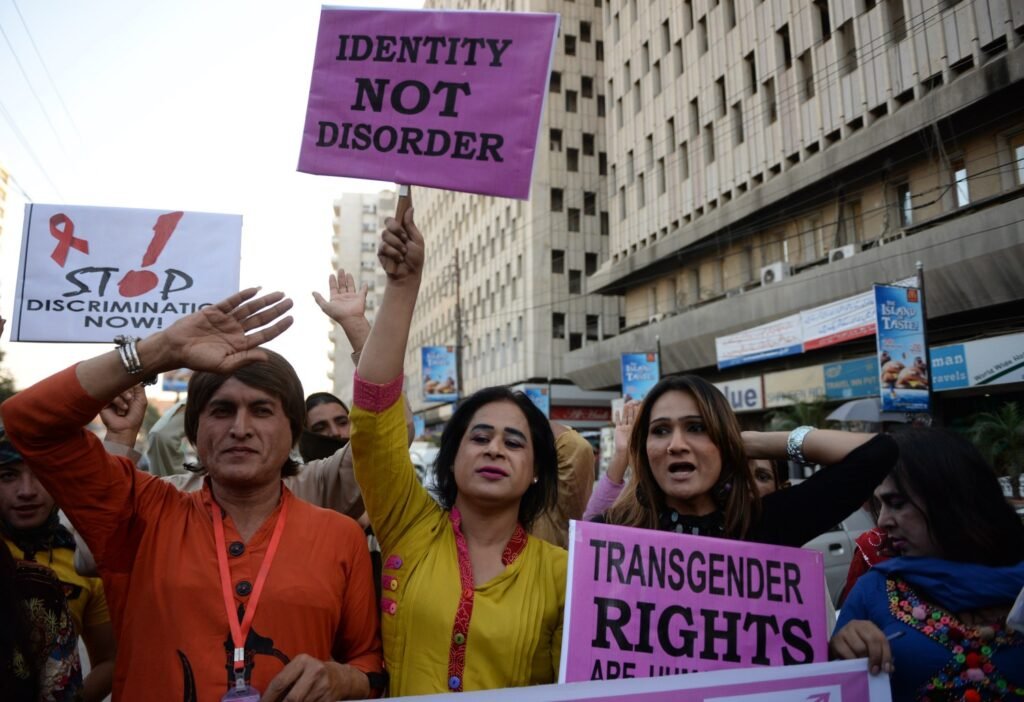
People in Pakistan still don’t know much about or care about the rights of transgender people, especially when it comes to property and inheritance. This is still true, even though civil rights and legislation are slowly getting better. The 2018 Transgender Persons (Protection of Rights) Act was a big step forward, yet many transgender people still face problems with the law, their homes, and society in general. Most of the time, this is because they hate women and don’t know the rules of their religion or culture.
This article talks about the very important issue of transgender people being permitted to buy homes. We look at the laws, how people in Pakistan feel about transgender people, and the religious disparities that transgender people have to deal with every day. We also talk about how to make things better so that everyone, no matter what gender they identify with, has the same rights, can own property, and is protected by the law.
How to Learn About Transgender Identity in Pakistan
We need to understand what it means to be transgender in Pakistan before we talk about the legal difficulties. In this context, “transgender” typically refers to khwaja sira, intersex individuals, and those whose gender identity does not conform to the societal roles of men and women in Pakistan.
Trans individuals have been throughout South Asian culture for an extended period, although they have predominantly been marginalized, particularly regarding civil rights, education, employment, and most crucially, property rights.
A Look at the Legal Rights of Transgender People in Pakistan
The Pakistani government passed the Transgender Persons (Protection of Rights) Act in 2018. It lets people officially say they are transgender and protects them from discrimination in many areas of life, such as at work, in school, in health care, and in housing. This bill was a big step in the right direction, but it doesn’t do enough to help transgender people with their property problems.
The Act doesn’t say for sure that transgender people have property rights or who can inherit property under Islamic inheritance laws. People in Pakistan still use these laws a lot to find out how to split up property.
What trans people need to know about the laws governing property and inheritance
Laws that are hard to understand
Transgender individuals struggle to comprehend inheritance laws due to the ambiguity of their gender identity. Islamic inheritance laws explain how to split up property based on gender. Shariah courts explain these rules all the time. Men often make twice as much money as women. But where does a transgender person fit into this two-part system?
Most Pakistani courts still don’t know what this means. This means that transgender people could lose their property or be treated unfairly by their family or society, especially when it comes to land or property that belongs to their family or ancestors.
Being turned down by family and having rights taken away
Even if transgender people have a legal right to part of a property, their family members’ bias toward them could sometimes stop them from claiming it. Families often abandon transgender relatives or refuse to recognize their identification, thereby infringing upon their legal rights as legitimate heirs. This long-standing social bias makes people who are already on the outside feel even more alone.
Court cases and arguments about the law
Transgender people have had to go to court several times to settle disagreements over property. There is no clear legal rule for how to handle inheritance for transgender people in Islamic law; hence, the outcomes are always varied. Many transgender people don’t know enough about the law, don’t have the money, or don’t have the support to fight court proceedings for a long time. This could mean they have to leave their homes or become homeless.
Bias against women owning land and property
Land rights in Pakistan are still not very clear, and they mostly help men. Cisgender women also have a hard difficulty claiming and keeping ownership. Transgender people have it much worse. The law and society as a whole are not fair to transgender people.
Most of the time, you can only choose between two genders on property records, land titles, and ownership paperwork. This means that transgender people can’t write their real names on their things. Also, property brokers, landlords, and even government workers often won’t help transgender people because they don’t believe them or make fun of how they look.
How transgender rights and Islamic law affect each other
It is very important and sensitive to talk about transgender issues and Islamic law in Pakistan. Some religious scholars think that a person’s biological sex at birth should decide how inheritance rules work. Some people think that transgender people should be able to inherit things like money and property.
In 2021, the Federal Shariat Court started to look at parts of the Transgender Act. This makes it much tougher for transgender rights in Pakistan. Some progressive religious groups want to be open to everyone, but many conservative groups don’t want things to change because they think that’s how Islamic teachings have always been regarded.
Actual stories of transgender people who have been denied housing
These legal and theoretical arguments are based on real people. Because of gender bias, many of them are forced to leave their homes, lose their inheritance rights, or live in poverty. Many transgender people in cities like Lahore, Karachi, and Peshawar have said that they were denied part of their family’s property just because they wanted to live openly as trans people.
People complain that their neighbors, landlords, or even the police annoy them when they want to rent or buy a house. These things don’t happen very often, and when they do, the police and courts don’t always help the victim.
What needs to be different? Ideas for Change
Pakistan needs to alter its property laws right away and enlighten people about transgender individuals to get rid of the prejudice against them. This will preserve the rights and dignity of everyone. Here are some crucial things to keep in mind:
- A Clear Set of Rules: The government should make it clear in laws about property and inheritance what rights transgender people have based on how they identify as a gender, not just their biological sex.
- Religious Dialogue: Work with religious scholars to learn about Islamic inheritance rules in a way that protects everyone’s rights, including those of transgender people, while also respecting their dignity.
- Judicial Training: Teach judges, lawyers, and court personnel about trans property law, trans protection laws, and the special problems that trans individuals face.
Start campaigns in the media and in schools all around the country to lower societal bias and tell families and communities about the legal rights of transgender people.
Make it easy for transgender people to get to legal help centers so they can protect their property claims and claim their inheritance rights.
Final Thoughts: For Justice and Respect
Transgender persons in Pakistan are battling for their property rights, but it’s also a fight for their rights as people. Transgender people will continue to be pushed to the edges of society if they can’t legally inherit property, find safe housing, or seek protection from gender bias.
Pakistan has to realize that transgender rights are also rights that all people have. Doing nothing won’t get you anywhere. It will come from rules that apply to everyone, a better knowledge of religion, and a common goal to treat everyone fairly and with respect, regardless of their gender.
FAQ’S
Yes, in theory. But a lot of people don't get what they deserve since the rules aren't clear and inheritance isn't fair.
People can interpret things in various ways. There isn't just one way to look at things, which is why it's so important to become active in academia and change the law.
They can go to court and get help from legal aid groups, but the judge's decision will rely on how they see the law and the evidence.
Yes. The Khawajasira Society, the Sathi Foundation, the Gender Interactive Alliance (GIA), and other non-governmental organizations (NGOs) can help with legal, mental health, and social issues.